
The Festool Domino: The Ultimate Joinery System for Woodworkers
Few tools introduced in the past few decades have changed the way woodworkers approach joinery as dramatically as the Festool Domino. When it was first released, many woodworkers were skeptical. Could a handheld power tool really replace traditional mortise-and-tenon joinery? As it turned out, the Domino didn’t replace traditional joinery — it made it faster, easier and remarkably consistent.
At the heart of the Domino system is a simple idea: use a precision machine to cut perfectly sized mortises and join them with loose tenons, creating joints that are both strong and easy to produce. The result is a system that combines the strength of traditional mortise-and-tenon joinery with the speed and accuracy of modern power tools.
Over the years, Festool has refined the system and expanded the lineup to include several machines, including the recently updated Festool Domino corded DF 500 RQ, the new cordless DFC 500 E, and the larger Festool Domino DF 700 XL for heavy structural joinery.
In this three-part series, we take a close look at the Domino system, explore the capabilities of the DF 500 RQ-Set, and examine the accessories that can make this already versatile machine even more useful in a hobby woodworking shop.
In Part 1: Mastering the Festool Domino, we’ll look at the three Domino models, the basic types of joints that you can make with the Domino, how it compares to other joinery systems, and why it’s become so darn popular among professional and dedicated hobbyist woodworkers.
Coming soon:
Part 2: The Festool Domino DF 500 RQ-Set: features, capabilities and setup.
Part 3: Essential Accessories for the Festool Domino DF 500.
Part 1: The Festool Domino System — a modern approach to woodworking joinery
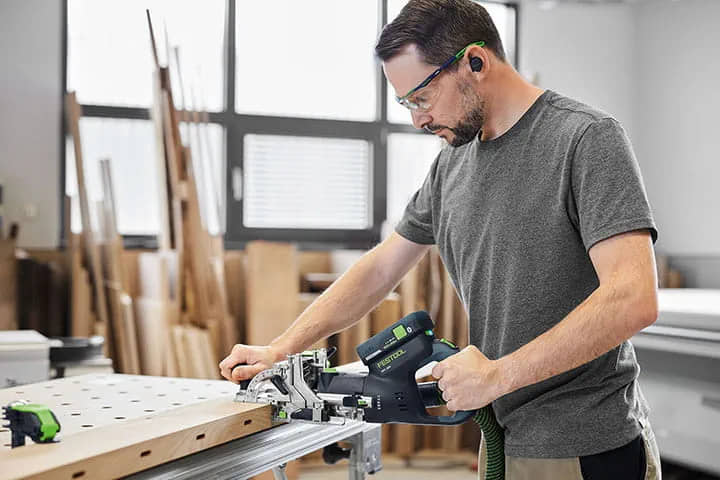
The Festool Domino system is essentially a modern interpretation of one of the strongest joints in woodworking: the mortise and tenon. Instead of cutting a tenon on the end of a workpiece, the Domino system uses a handheld machine to cut precisely sized mortises in both parts of the joint. A pre-manufactured loose tenon, known as a Domino, is then glued into the mortises to create the finished joint.
The machine uses a rotating cutter that also oscillates from side-to-side as it plunges into the wood. This unique cutting action produces a mortise with rounded ends that perfectly matches the shape of the Domino tenons. The result is a tight, accurate joint that can be produced in seconds.
For hobbyist woodworkers, the Domino offers a way to produce strong joinery without needing large stationary machines or complex jigs.
How Domino joinery works
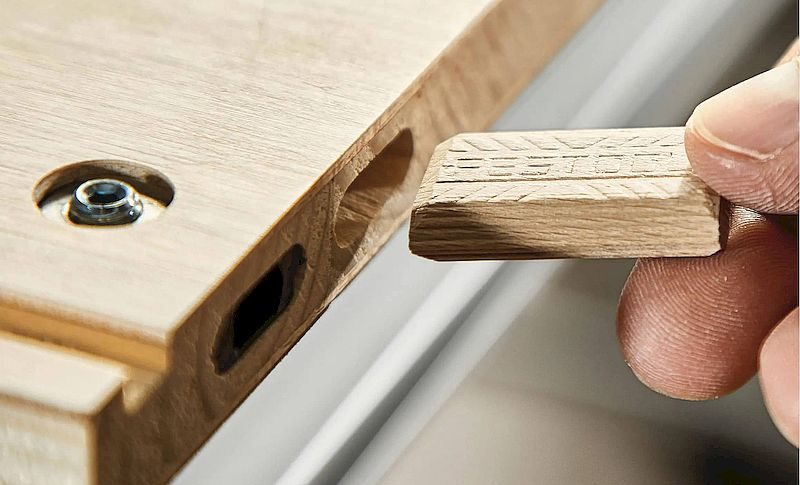
If you’ve ever spent hours fiddling with doweling jigs, struggling to mark perfect biscuit slots, or wrestling a router jig into setup, then the Festool Domino system is like discovering a secret shortcut in woodworking.
Using the Domino is surprisingly straightforward. First you mark the joint location, then position the machine on the workpiece and finally plunge the cutter into the wood to create a mortise. The same process is repeated on the mating piece.
Once the mortises are cut, a Domino tenon is glued into one side of the joint. The mating piece is then fitted over the exposed portion of the tenon, creating a joint that is mechanically strong and accurately aligned.
Because the tenons are made from beech or sipo (an African hardwood used as a mahogany substitute) and feature small ridges along their surface, they provide excellent glue adhesion while also allowing room for excess glue to escape during assembly.
One of the advantages of this system is its flexibility. The Domino allows you to cut mortises with slightly different widths, which makes it easy to align parts during glue-up without sacrificing joint strength.
The three Domino machines
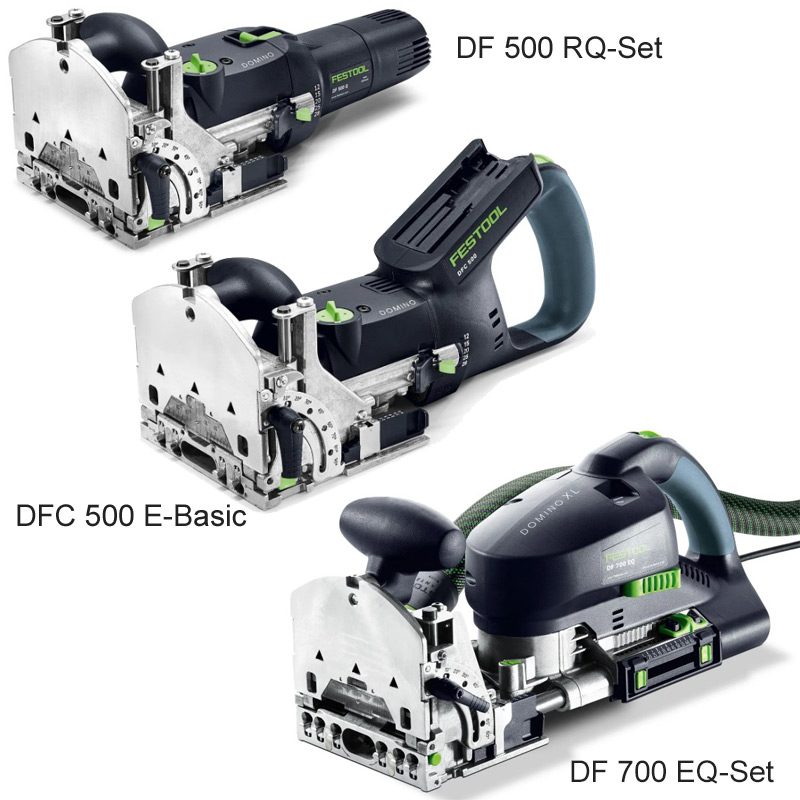
Festool currently offers three Domino joiners, each designed for different types of work. The original Festool Domino DF 500 is the most common model found in small woodworking shops. It is designed for furniture building, cabinetmaking, and general woodworking projects.
The updated Festool Domino DF 500 RQ builds on that foundation with refinements to the design and improved ergonomics. There is now also a cordless version of the DF 500 — the DFC 500 E.
For larger projects such as doors, workbenches, and heavy timber furniture, Festool offers the Festool Domino DF 700 XL. This machine uses much larger tenons and is capable of producing extremely strong structural joints.
For most hobbyist woodworkers, however, the DF 500 series provides more than enough capability for the majority of shop projects.
Types of joints the Domino creates
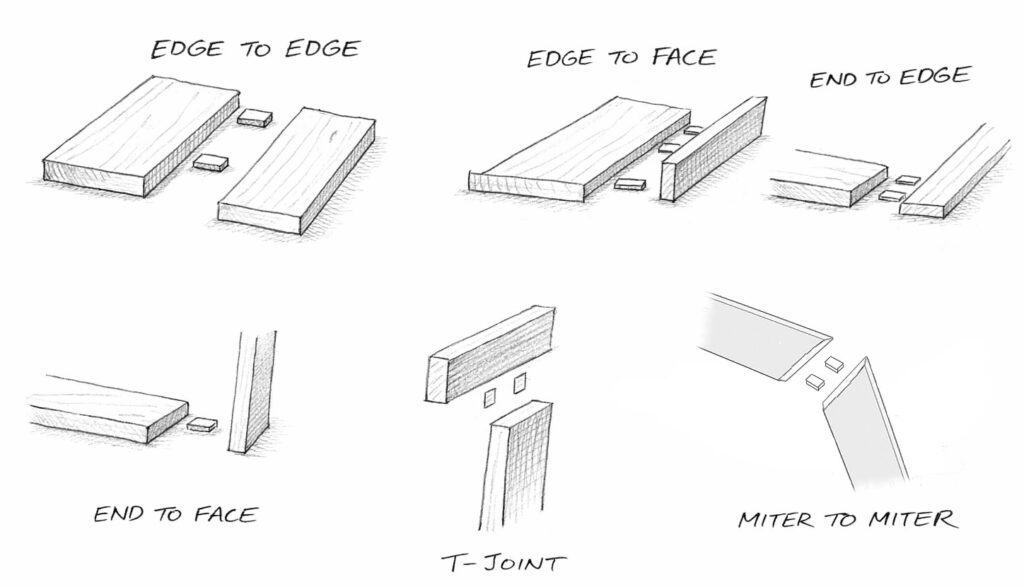
The Festool Domino is valued for its ability to create strong, accurate and repeatable joints across a wide range of woodworking situations. Although it functions as a floating‑tenon system, its real strength lies in how easily it adapts to different joint orientations without the need for complex jigs or time‑consuming setups. Whether you are building furniture, cabinetry, doors, or architectural components, the Domino can replace or enhance many traditional joinery methods.
Here are some of the common joints you can make with the Domino.
► Edge‑to‑edge joinery is one of the simplest applications. It connects two boards along their long grain, which is commonly done when making tabletops, panels, or benchtops. While a standard glue joint can work on its own, adding Domino tenons keeps the boards aligned and prevents them from shifting during glue‑up. The deeper mortises and long‑grain bonding make the joint stronger and more reliable than biscuits, and the alignment is far more precise.
► Edge‑to‑face joinery is one of the Domino’s most common uses, especially in cabinet and carcass construction. By plunging a mortise into the edge of one board and the face of another, you can create a strong right‑angle joint that is both hidden and structurally sound. This method is faster and stronger than pocket holes or biscuits and provides excellent alignment for shelves, face frames and cabinet boxes.
► End‑to‑face (or corner) joinery is essential for furniture construction, where rails, aprons, and stretchers meet legs or posts. Because end grain does not hold glue well, the Domino’s floating tenon bridges into long grain on the mating piece, creating a joint that behaves much like a traditional mortise‑and‑tenon. This enables you to produce structural, load‑bearing joints in a fraction of the time required for hand‑cut or machine‑cut mortises.
► End‑to‑edge joinery works similarly but is used when the receiving piece is narrower, such as in small frames, picture frames, or thin rails. The Domino provides reinforcement and alignment in situations where dowels or biscuits would be difficult to place accurately, especially in narrow stock.
► End‑to‑end joinery, which enables you to join two boards lengthwise, is inherently weak. The Domino’s tenons add long‑grain glue surfaces that does increase strength and stability.
► Miter‑to‑miter joinery is another area where the Domino shines. Miters are attractive but fragile, especially on wide boards or long edges. By inserting one or more Domino tenons across the miter, you add internal reinforcement that prevents the joint from opening over time. This makes it ideal for picture frames, boxes, waterfall edges, and decorative trim where both strength and appearance matter.
► T‑joints are also easy to create with the Domino. These joints connect the face of one board to the middle of another, such as when installing shelves or dividers. The Domino’s adjustable fence allows you to plunge mortises at consistent heights, producing strong, repeatable joints that resist racking better than screws or pocket holes.
The Domino can even act like a spline system. In situations where traditional splines would be difficult to cut — such as curved work, wide miters, or decorative joints — the Domino’s floating tenons provide the same reinforcement with far greater speed and precision.
The Domino’s versatility comes from its ability to create long‑grain glue surfaces even when joining end grain, its integrated fences and stops that ensure consistent mortise placement, and its range of tenon sizes that scale from delicate frames to heavy furniture. These qualities allow it to replace dowels, biscuits, pocket holes, and even traditional mortise‑and‑tenon joinery in many applications while still delivering strength, accuracy, and repeatability.
Domino vs other joinery systems
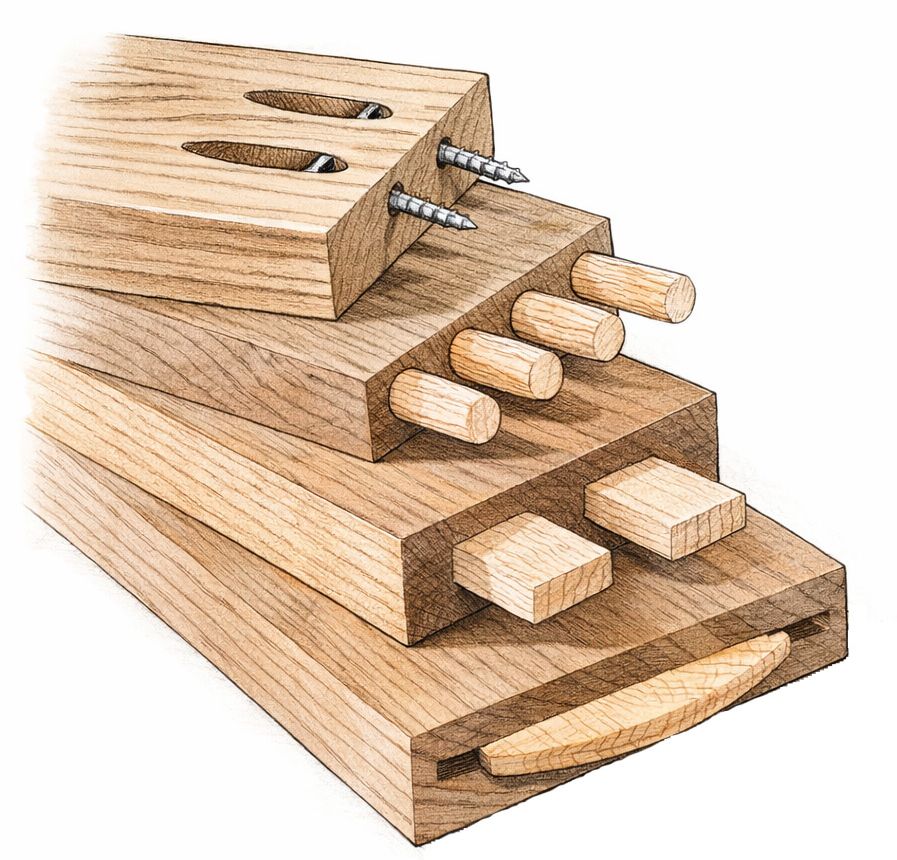
Before the Domino arrived on the scene, many woodworkers relied on biscuit joiners, doweling jigs, or pocket‑hole systems to create fast and reasonably strong joints.
Compared to traditional dowels, the Domino system lets you plunge accurate mortises in one pass without complicated jigs, and because the mortises are aligned by the tool’s integrated fences and stops, setup time is often cut dramatically. With dowels, you’re still aligning drill guides, fiddling with spacing, and hoping your holes stay perfectly matched. With the Domino, once you learn the process, you can repeat joint after joint quickly and reliably.
And when you stack the Domino up against a biscuit joiner, the differences become even clearer. Biscuit slots are shallow and tend to let parts move slightly during glue‑up because the biscuit itself is small and thin. Domino tenons, by contrast, penetrate deeper and provide a much larger glue surface across the joint. That means better holding strength and less effort to squeeze and align pieces during assembly.
Pocket‑hole joinery adds another angle to the comparison. Pocket holes are extremely fast, require minimal layout, and allow you to assemble parts immediately without waiting for glue to cure. But the joint relies heavily on mechanical fasteners rather than long‑grain glue strength, and the screws can pull pieces out of alignment if the clamping isn’t perfect. Pocket holes excel in face‑frame construction, shop furniture, and hidden structural work, but they don’t offer the same long‑term rigidity or clean, concealed strength that a Domino mortise‑and‑tenon provides.
When you look at all these methods side by side, the Domino stands apart because it combines the speed of biscuits and pocket holes with the structural integrity of traditional mortise‑and‑tenon joinery. The floating tenons create a deep, long‑grain‑to‑long‑grain bond, and the tool’s precision means joints register consistently without fussing with alignment jigs or relying on screws to pull things together.
In short, where dowels are harder to set accurately, biscuits offer limited strength and precision, and pocket holes depend on screws rather than glue surface, the Domino gives you a sweet spot of speed, strength, and accuracy that makes joinery easier and more dependable — especially for furniture, casework, and cabinets where hidden, robust joints matter.
For many woodworkers, the biggest advantage is repeatability. Once the machine is set up, it can produce identical mortises quickly and accurately.
Why the Domino has become so popular
The Festool Domino system isn’t just another joinery gadget — it’s a rethink of how loose-tenon joinery can work best. Fast setup, precise mortises, twist-proof floating tenons, and repeatable accuracy make it uniquely suited for hobbyists who want professional results without the headache of complex jigs and measurements. Compared to dowels and biscuits, it gives far better alignment, held strength, and confidence in joints that matter — especially when your work walks out the door as a finished piece.
While the Domino is certainly an investment, many woodworkers find that it quickly becomes one of the most frequently used tools in their shop.
In the next article, we’ll take a closer look at the features and capabilities of the Festool Domino DF 500 RQ-Set and explore what makes it such a versatile tool for furniture and cabinetmaking.