TIPS & HOW TO
The Difference: pores and grain

Carl Duguay
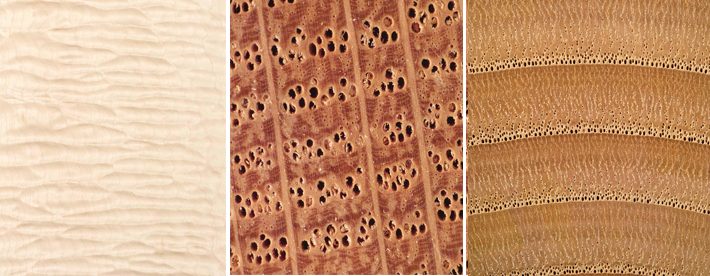
Wood pores and wood grain are two distinct characteristics of wood that define its structure, texture and appearance.
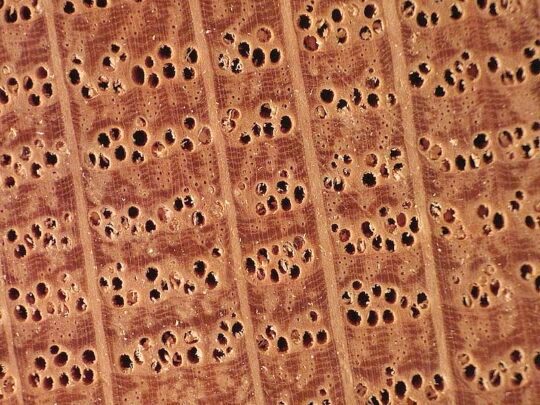
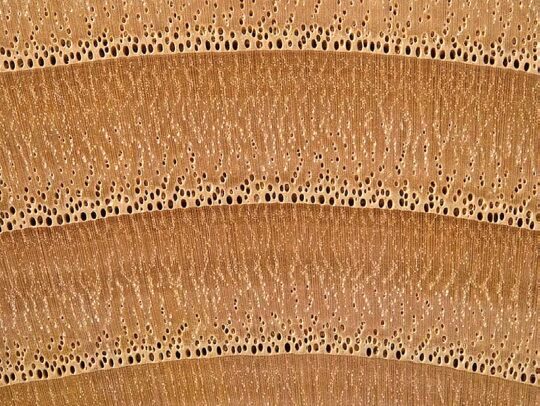
Wood pores, also called vessels, are remnants of the tree’s vascular system. These tiny channels transported water and nutrients from the roots to the leaves during the tree’s life. Pores are most visible on the end grain of hardwoods, appearing as small round or elongated openings. Their size, distribution and arrangement vary between species and have a significant impact on a wood’s texture and workability. Woods with large pores, such as oak and ash, often referred to as open-pored or ring-porous woods, may require filling to achieve a smooth finish. Diffuse-porous woods, like maple and chestnut, have pores that are relatively uniform in size and distribution. In contrast, softwoods lack pores entirely, as they rely on tracheids instead of vessels for water conduction, giving them a different textural quality.
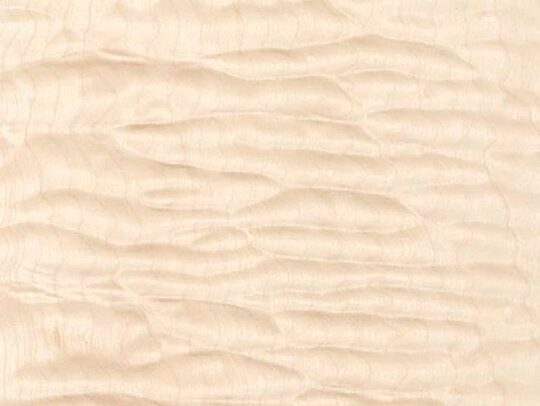
Wood grain, often referred to as the figure or grain pattern, describes the alignment, pattern and texture of wood fibres. It is a key contributor to the aesthetic appeal of wood and gives it its distinctive character. The grain is shaped by the growth rings, the arrangement of wood cells and the method used to cut the lumber. Grain patterns can be straight, wavy or interlocked, and the variation in these patterns can be dramatic, even within the same species. Grain direction also affects a wood’s strength and stability, with some grain types being more prone to splitting or warping. Different sawing techniques, such as quarter-sawn, rift-sawn and flat-sawn, highlight unique grain patterns, each adding its own character to the finished piece.
Understanding the nuances of wood pores and grain can help in selecting and working with wood, whether the goal is structural integrity, ease of finishing or enhancing visual appeal.