TIPS & HOW TO
Spray finishing in a small shop? You bet!

Carl Duguay
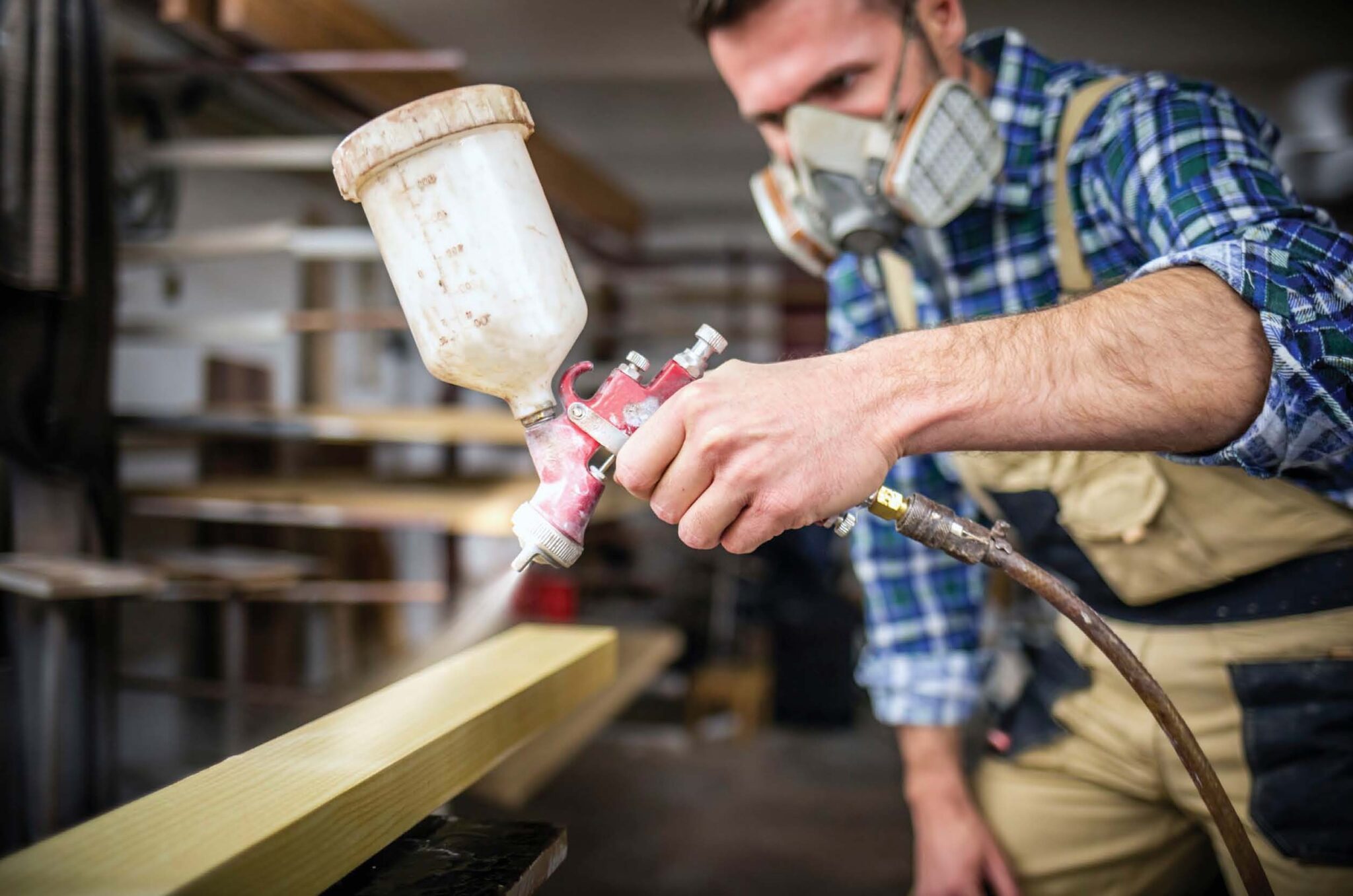
If you’re at the point where finishing your projects with a brush is beginning to take too much shop time, then you really should think about spray finishing.
Most hobby woodworkers do their finishing with a brush or rag. However, as you begin to undertake more projects, or you move to larger carcass work, it’s natural to start thinking about spray finishing. If you work in a small shop you might think that spraying is out of the question. However, that’s not the case. A few tools and a knock-down spray booth will enable you to spray finishes easily and safely.
Why spray?
There are at least three good reasons for considering a switch to spray finishing. First, it’s surprisingly easy to achieve a near-perfect finish with spraying. With a bit of practice, you’ll be able to apply the finish evenly and uniformly in a lot less time than you would by brush. Second, because a spray finish goes on thinner than a brushed finish, it dries fairly quickly. Dust doesn’t have much time to contaminate the surface, and you can apply any follow-up coats that much sooner. Third, because spray finishes are fast and easy to apply, you can spend more time building projects rather than finishing them.
An additional point to consider: spraying a project, no matter the size, allows you to get into inside corners much easier than brushing or wiping. This is especially true with film finishes.
Two spraying options
A spray finishing system consists of two devices that work in tandem – a continuous source of pressurized air and a gun that atomizes the finish and delivers it in a controlled pattern onto the work surface. There are two basic types of spray systems: those that deliver air at high pressure (compressor-driven spray guns) and those that use high volume, low pressure (HVLP systems).
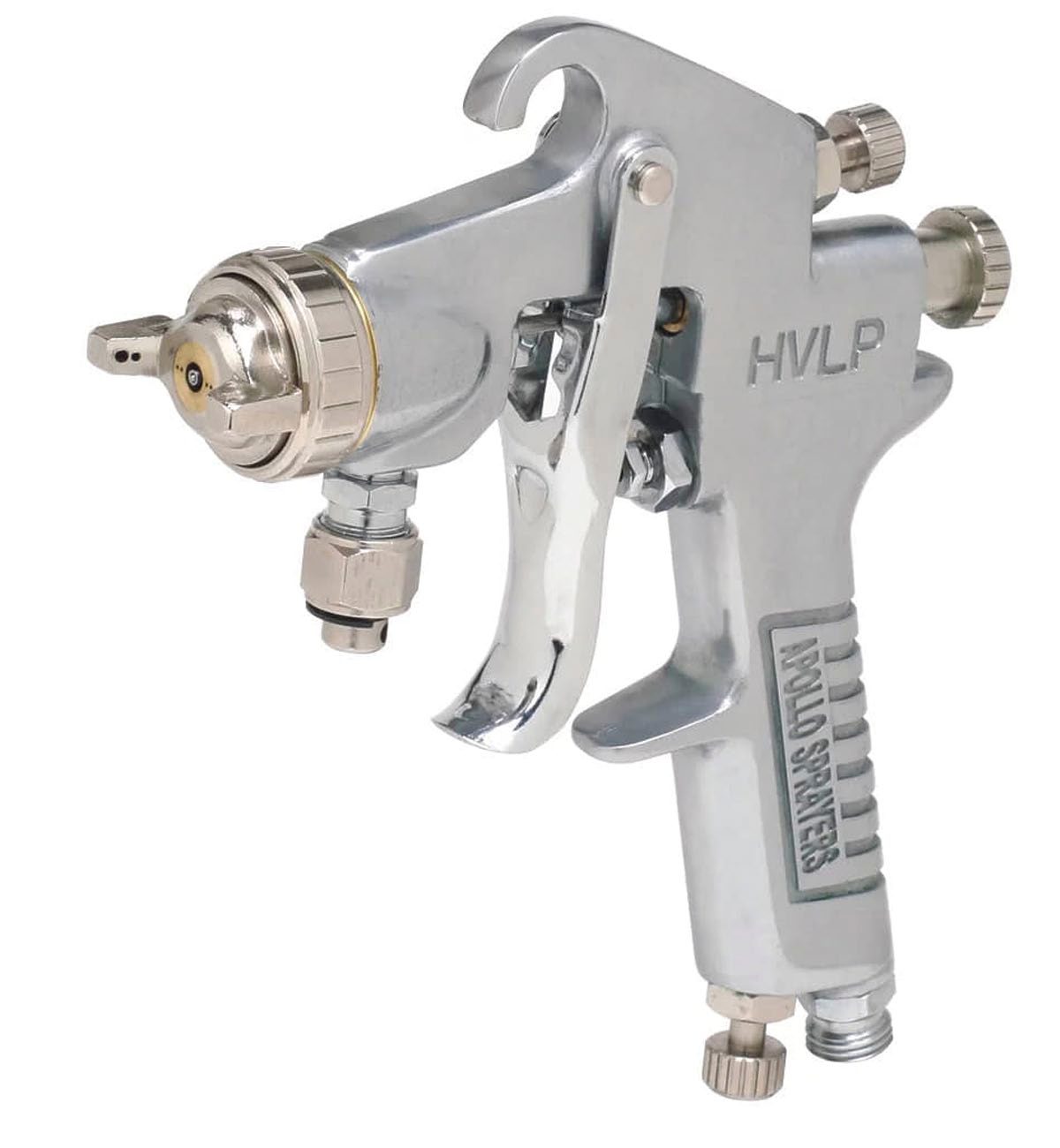
Since the advent of spray finishing, air compressors have provided the necessary source of pressurized air. The compressor forces air at high pressure into a spray gun, which atomizes the finish and projects it at high pressure (upwards of 60 or 70 PSI) onto the work surface. The drawback is that, because of the high pressure, only about 30 percent of the finish lands on the work surface. Most of the finish either bounces back from the surface or ends up sprayed around the work surface. Quite a bit of the wasted finish material ends up vented into the atmosphere. HVLP spray guns that run off a compressor are referred to as “conversion spray guns.” Because these spray guns require a lot of air, you’ll want to use a compressor in the 5 HP, 60-gallon range, and with an 80 percent or higher duty cycle, otherwise the compressor is going to by constantly cycling on and off.
HVLP systems significantly reduce the problem of overspray and bounce back. They rely on a high volume of air at a low pressure (a maximum of 10 PSI) to transfer upwards of 80 percent of the finish onto the work surface, which is better for your pocketbook and the environment. And, because the air is travelling at a low velocity, it’s a lot easier to control the spray.
HVLP turbine systems
Compressor systems use siphon-style spray guns and operate on the “venturi principle.” Air passes over a narrow opening filled with the finish, sucking the finish out of the container and depositing it on the work surface. This system tends to result in a great deal of overspray as a result of using turbulent high pressure (upwards of 50 PSI), low volume air to deliver the coating to the surface.
Alternatively, HVLP systems have put professional-quality spray application tools within reach of small shop owners and hobbyist woodworkers. Such systems are multi-stage turbines that deliver a large quantity of low-pressure air (10 PSI or less) to the spray gun. Some of this air is used to pressurize the cup containing the coating. When the trigger is pulled, this pressure forces the coating up a tube and into the air stream, which then deposits it on the surface being sprayed.
Transfer rates with a conventional compressor-driven gun can be as low as 20% with most of the coating being lost as overspray. With an HVLP system, it’s possible to achieve transfer rates up to 90%. This means less of the coating will end up in the air as overspray, making this a much more efficient system to use in a small or home shop. Turbines also warm and dry the pressurized air, which helps the applied finish cure more quickly. As well, turbines are very small, so they can be easily stored or moved from one location to another. You’ll find turbines are rated by the number of fans (called stages) they contain. The more stages, the greater the volume of air and pressure the turbine can deliver, and the wider the viscosity range of the finish you can use without having to thin the finish.
Use a waterborne finish
Ready-to-spray waterborne finishes are ideal for small shops or home-based shops because they don’t give off as many volatile organic compounds (VOCs) as solvent-based finishes, which means they’re safer for your health. As well, they’re practically odourless, easy to clean up and they don’t produce explosive vapours, so any fans or other ventilation equipment you use in the vicinity of the spray booth don’t have to be explosion proof.
Equally important, the current generation of waterborne finishes are just as durable and produce as beautiful a finish as the more traditional solvent-based finishes. These finishes have great clarity as they don’t have the typical amber cast that you get with solvent-based finishes. You do, though, need to pay somewhat more attention to temperature and humidity with waterborne finishes than you would with solvent-based finishes.
Go small
Space is at a premium in most home workshops and few are large enough to have sufficient room to set up a dedicated spray area. That doesn’t mean you can’t spray. But you do have to think and work small.
The key is to use a simple take-apart spray booth that you can quickly set up when needed, and easily disassemble for storage between uses. For large projects that won’t conveniently fit into your booth, apply the spray finish to project components before you do your assembly.
For small shops, a free-standing, knock-down booth is a good choice for spraying large projects. You can duct tape pieces of heavy cardboard (appliance boxes work well) together for the body of the booth. This makes it easy to quickly set up the booth when needed, and then fold it up and store it between uses. A small benchtop booth is handy when you want to spray smaller pieces. As an alternative to cardboard you could also use corrugated plastic – coroplast – available from most home centres and all sign shops.
I’ve had great success using large appliance boxes. Usually, I place them on a pair of 24″ high shop-built sawhorses. I also use a much more compact booth that sits on my workbench for small projects, such as jewellery boxes, display cases, drawer pulls, hand tools and the like. If you choose to use a fan, set it on the workbench behind the spray booth, so it vents away from the project you’re spraying. Optionally, tape a furnace filter over the face of the fan to absorb any overspray.
Set up the booth the night before so dust has time to settle down before you begin spraying. And for the best results, it’s important to illuminate what you’re spraying, so you can differentiate between wet and dry areas. Instead of overhead lights, use free-standing lights that you can raise, lower or angle to better illuminate the work. A simple shop-made turntable is also invaluable for rotating your work so that you can spray all sides.
Play it safe
Even though waterborne finishes are much safer than solvent-based finishes, it’s still a good idea to wear a proper respirator when spraying. Just as important, keep your equipment clean, especially the jet nozzles on the gun. When you’re only doing a small amount of spraying there may be a temptation to clean it the next time. I’ve made that mistake, and wouldn’t want to repeat it.
Most of the time, problems with spraying come down to technique. If you’ve not done it before, take the time to practice using the equipment. Understanding how to use an HVLP system isn’t complicated, but developing proficiency in using the gun does take time and practice. But, if you’re looking for the optimal finish, then the investment of money and time is well worth it.
If you’re at the point where finishing your projects with a brush is beginning to take too much shop time, and you’d like to up your finishing game, then you really should think about spray finishing. A good place to start is one of the better books on the topic, such as “Spray Finishing Made Simple,” by Jeff Jewitt, or “Spray Finishing,” by Andy Charron. Once you’ve made the plunge, spend the time to get acquainted with the spray system, and practice until you’re satisfied with your results before you commit to a first project. The time you invest in learning about the equipment and practicing with it will pay huge dividends in the long term.
Photos credit: Photos by Rob Brown (Lead Photo by Adobe Stock)
Get in the Corners
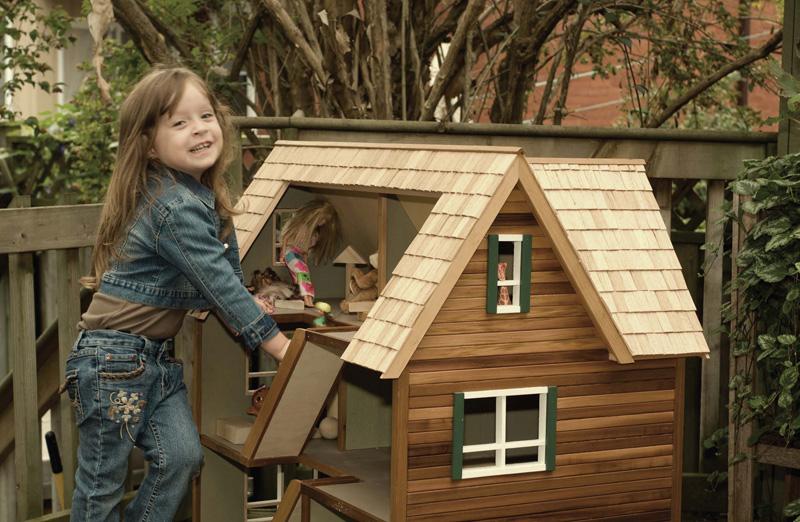
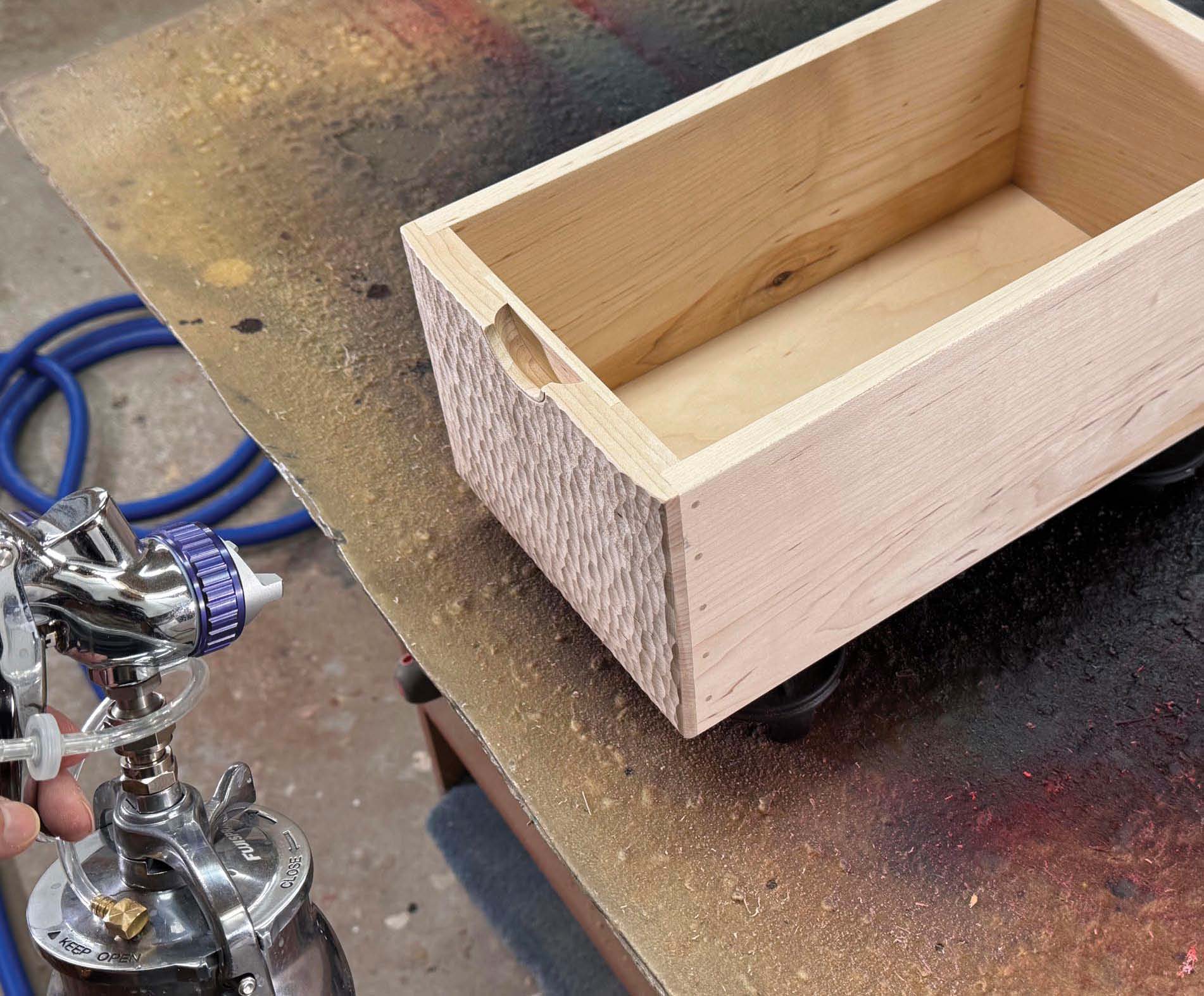
Spray finishing makes it easy to get finishing material into the inside corners and leave a smooth finish. This is especially important with drawers, but also for boxes, cabinets and many other pieces.
Lots of Advantages
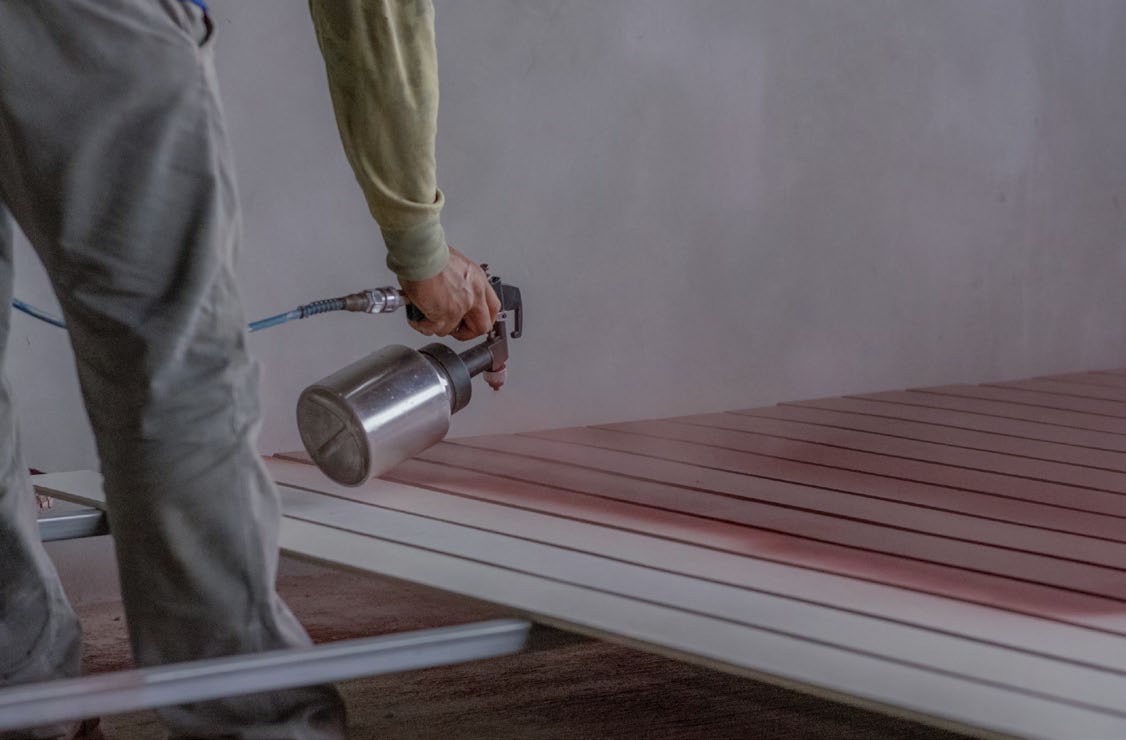
Spraying on a finish is beneficial for applying a finish to a large area, especially if there are corners or edges that need to be finished. (Photo by Adobe Stock)
Conversion Spray Gun
This is a conversion spray gun that’s used with a large compressor and high-pressure air. A hose brings finishing material from a larger container to the gun. Very few hobby woodworkers use this type of compressor-driven spray finishing equipment. (Photo by Apollo)
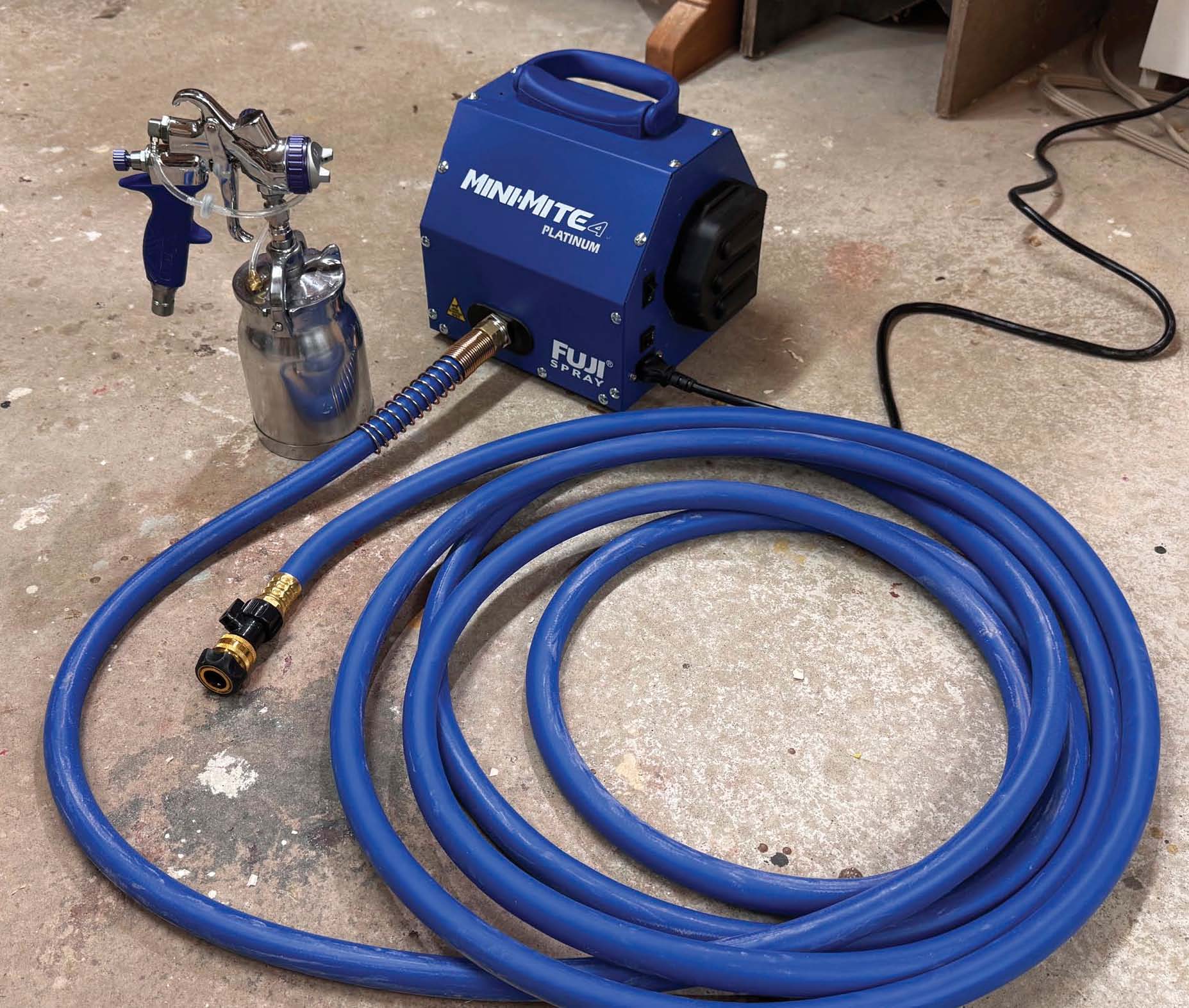
HVLP Turbine
A typical HVLP turbine spray unit includes a spray gun, hose and turbine unit. The turbine unit is small and portable. It provides the air pressure to spray the material onto the project. A standard electrical outlet is all that’s needed to operate an HVLP turbine unit.
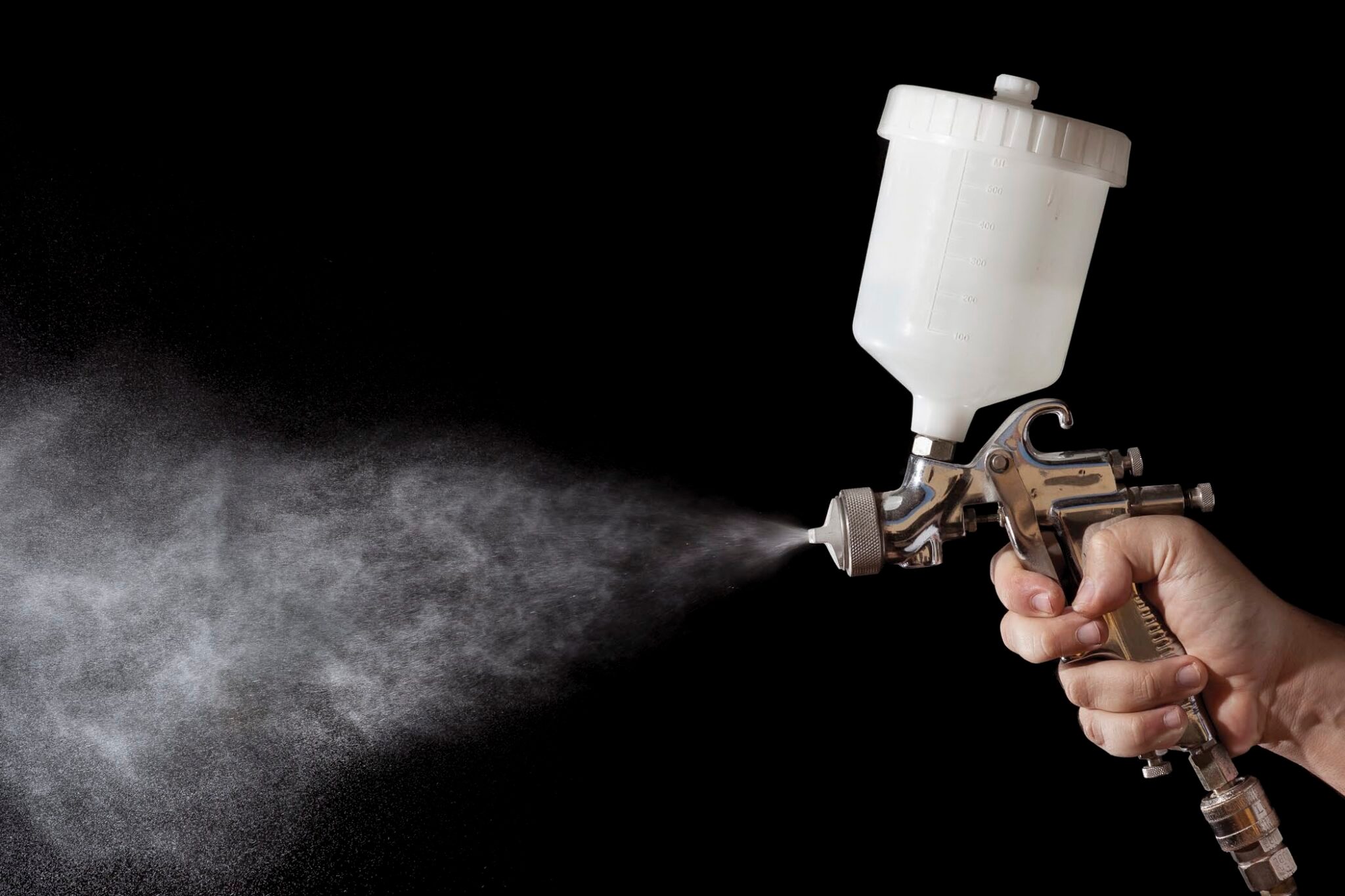
Atomizing Material
The basic principal of a spray finishing unit is to atomize finishing material and spray a coat of it onto a finished project or parts. The turbine unit or compressor provides the air pressure and the spray gun can be adjusted to produce a flow of material that can be applied to the wood’s surface. (Photo by Adobe Stock)
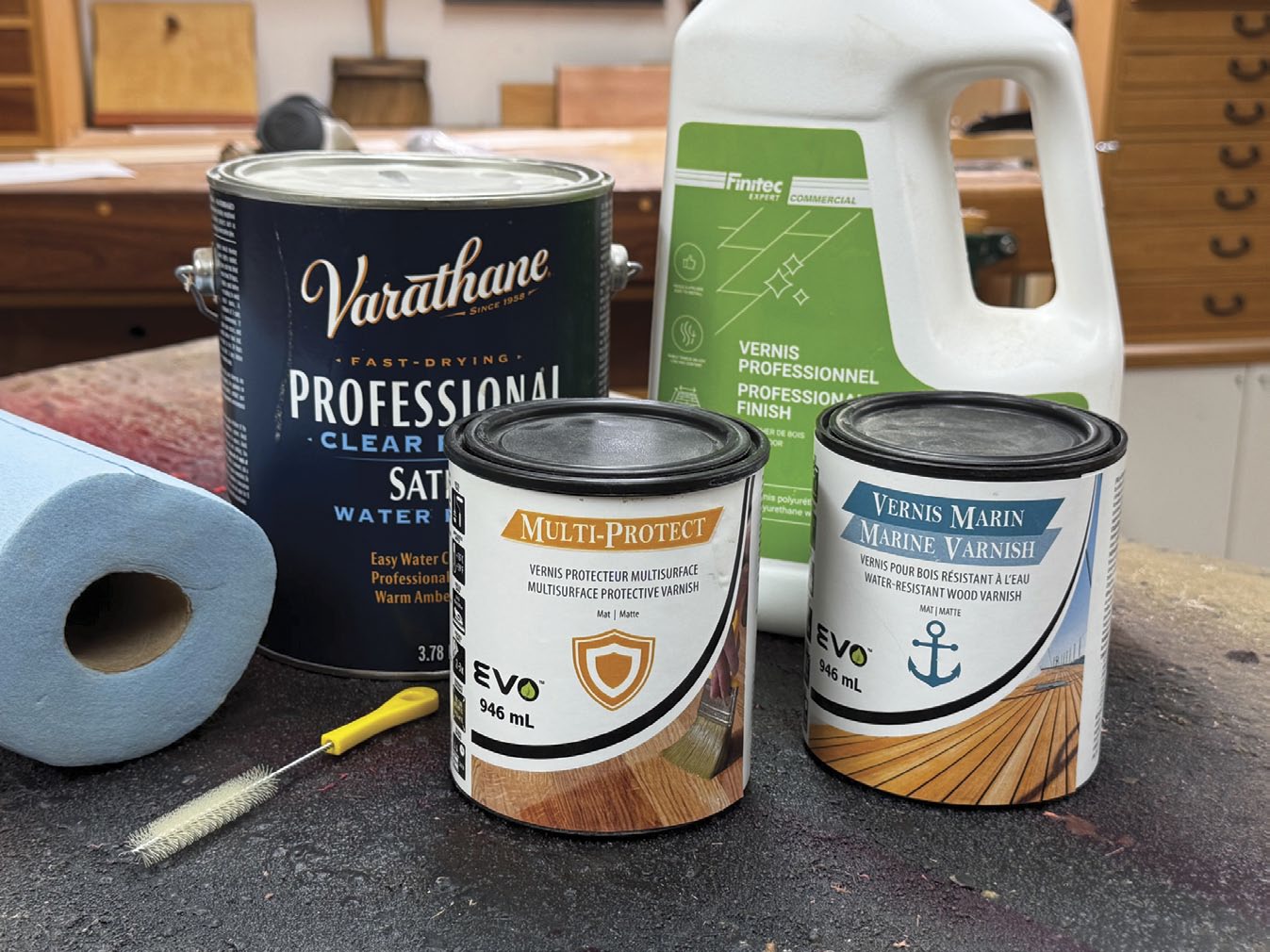
Water Works Wonders
Waterborne finishes make spray finishing much easier. Not only is their viscosity generally good for spraying, but cleanup is a breeze. Waterborne finishes also have much lower VOCs than oil-based finishes, making them safer for the environment and people. Additionally, they provide no risk of explosion.
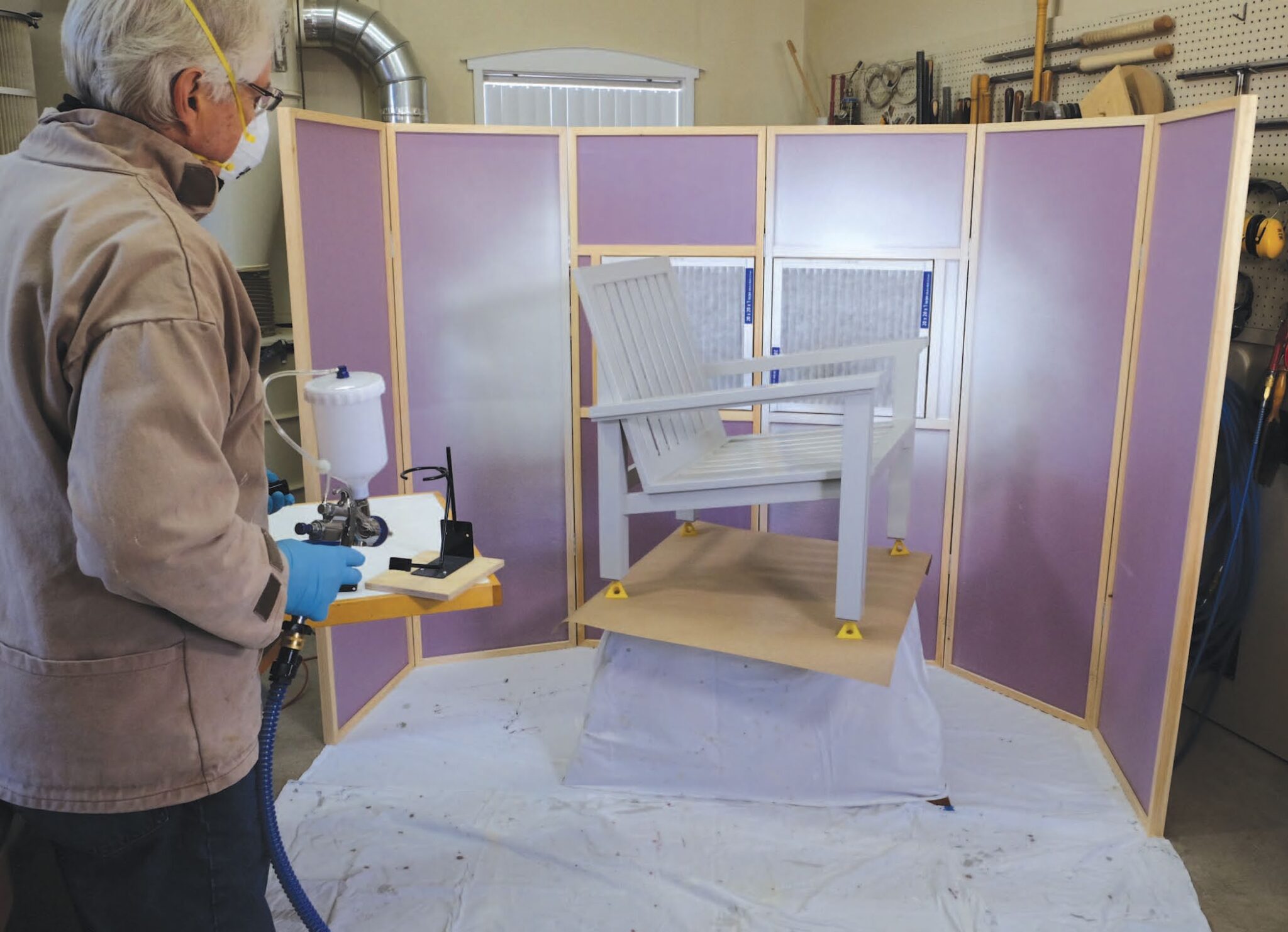
Spray Booth
A spray booth will help reduce overspray in the shop and help protect the pieces being sprayed. A simple spray booth can be made from cardboard, though most woodworkers would have little trouble making a very basic foldable booth. The construction of this booth is detailed in an article titled “Spray Booth for Small Shops” on our website. (Photo by Mark Salusbury)
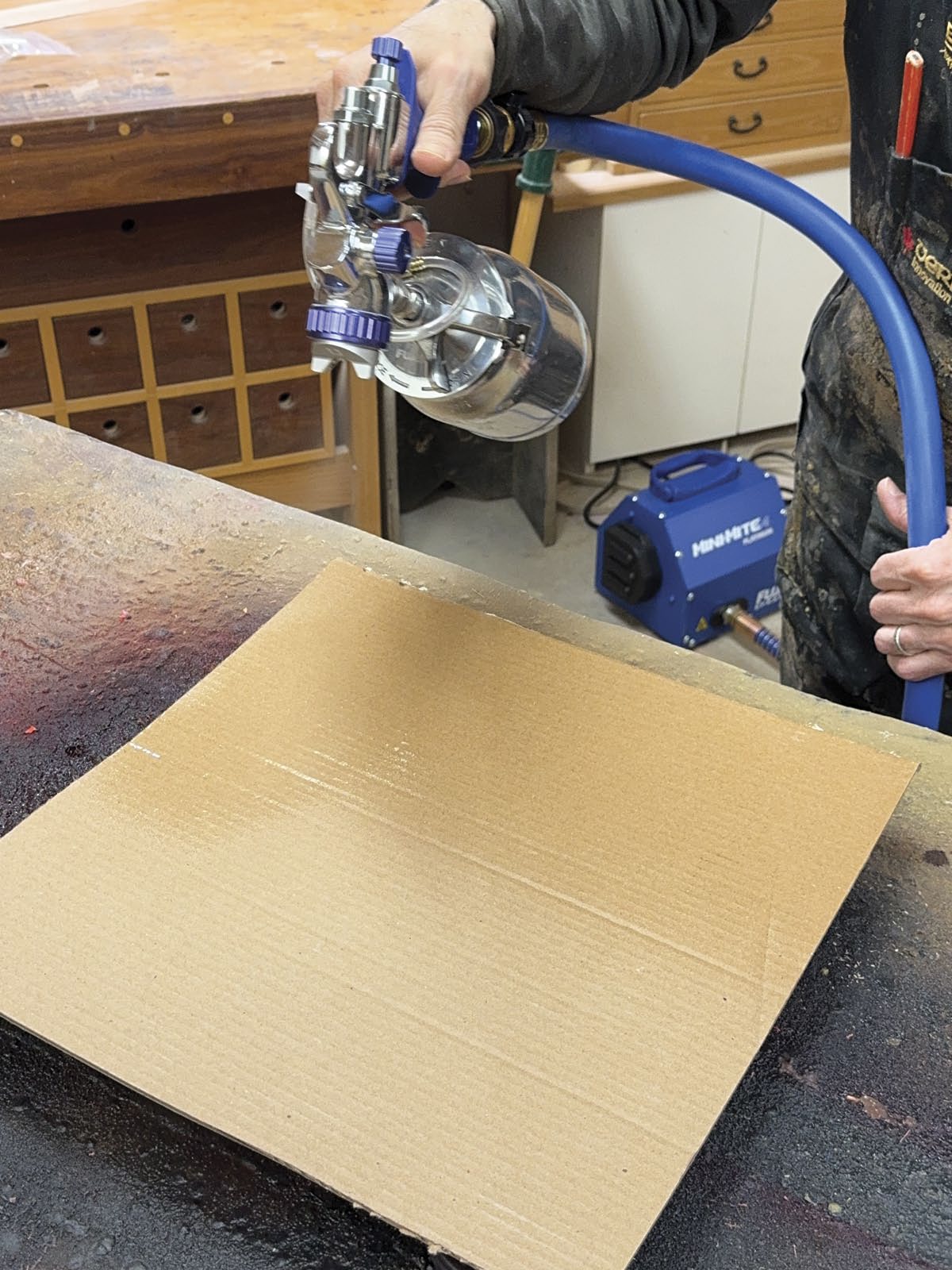
Practice Makes Perfect
Spraying water on cardboard or other wooden scraps is a great way to learn how to adjust the spray gun and practice your technique.
A Helping Hand
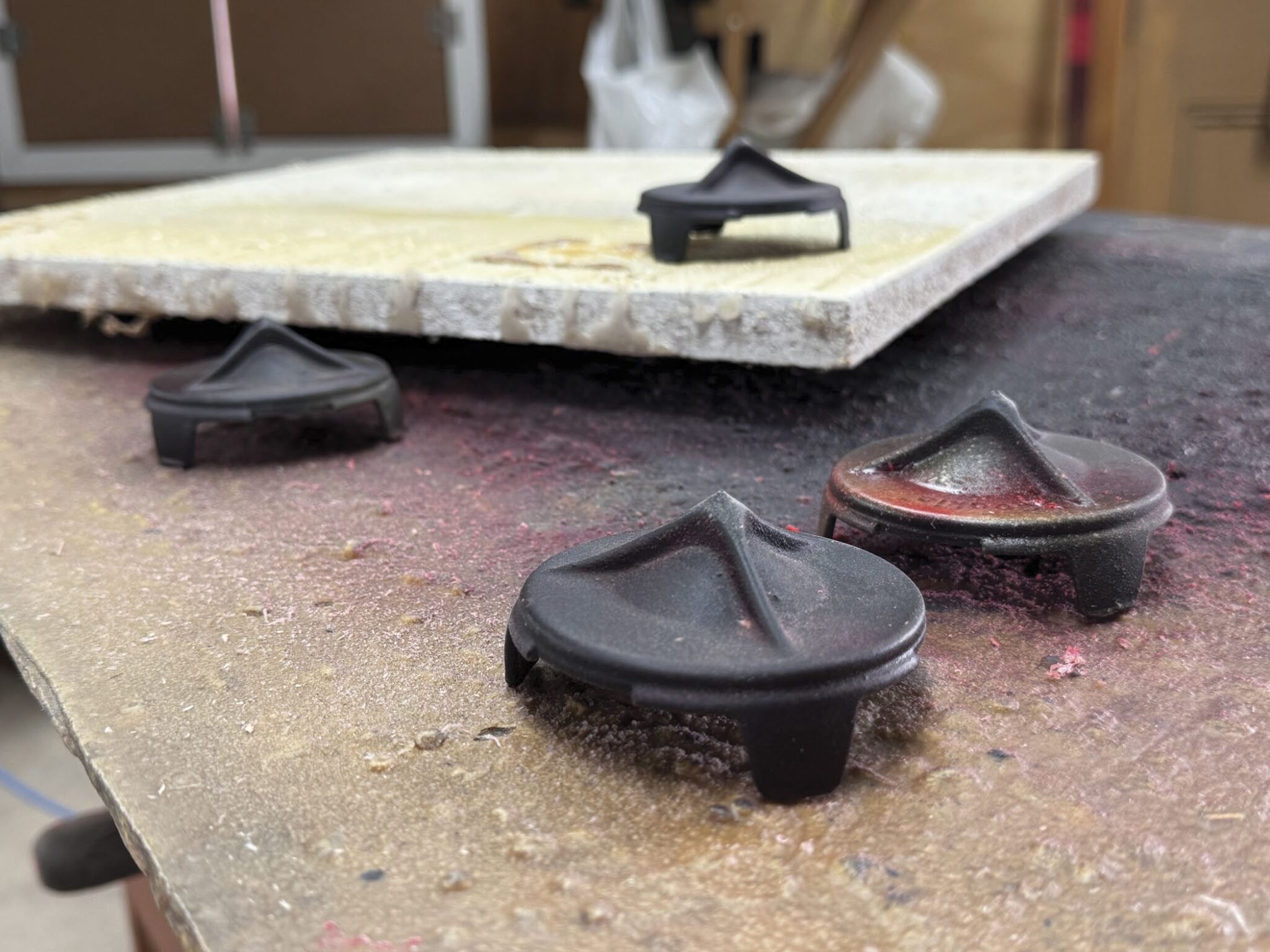
A lazy Susan, for rotating smaller workpieces while you spray them, and some work supports, to keep workpieces off the worksurface, are great additions to a new sprayer’s arsenal.