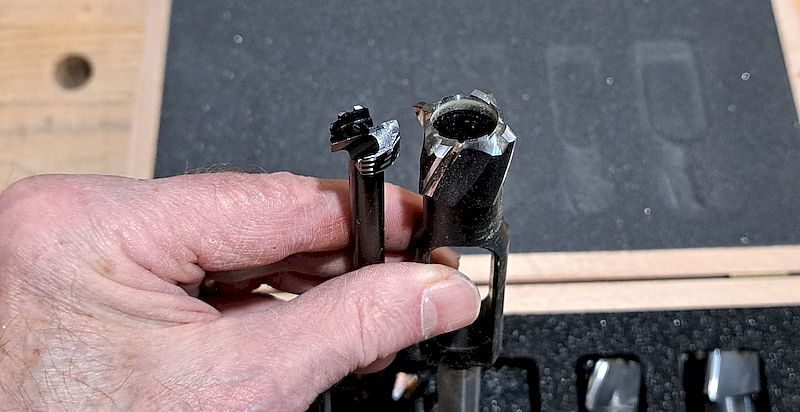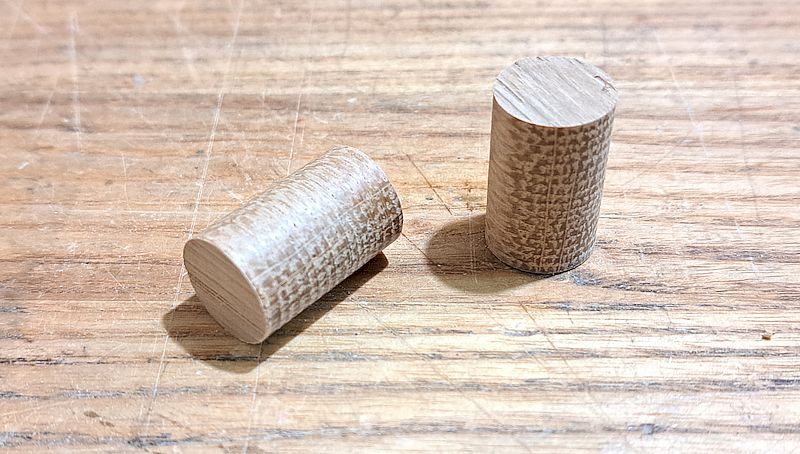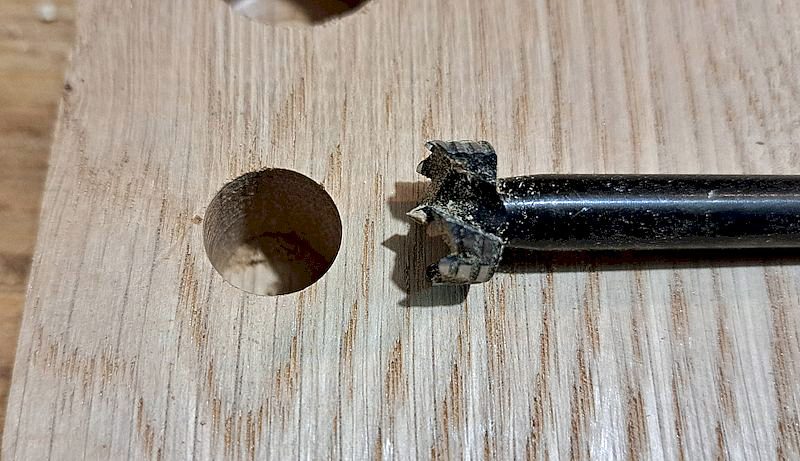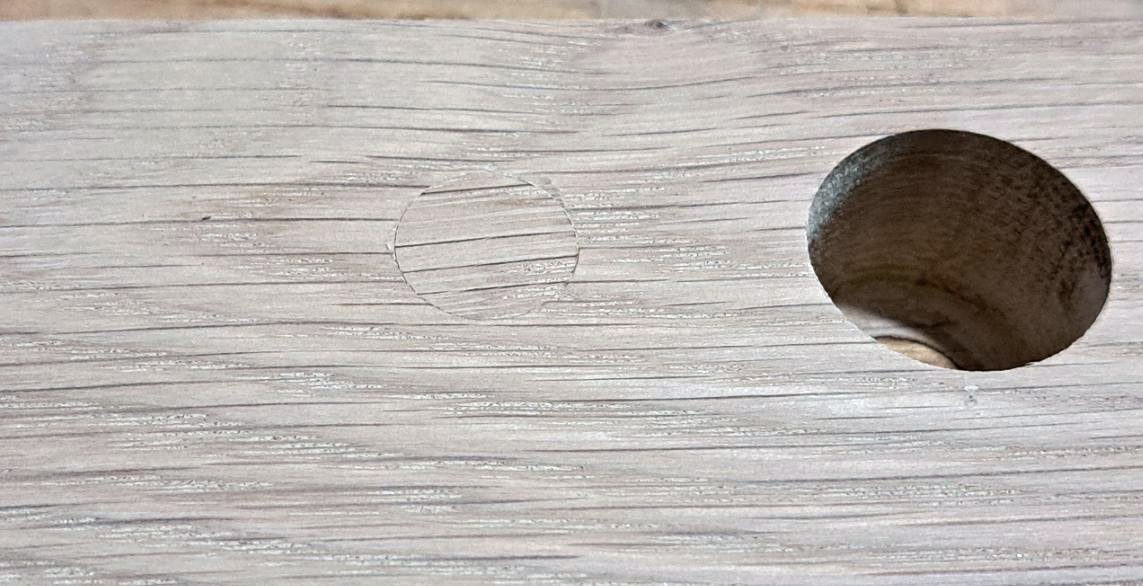

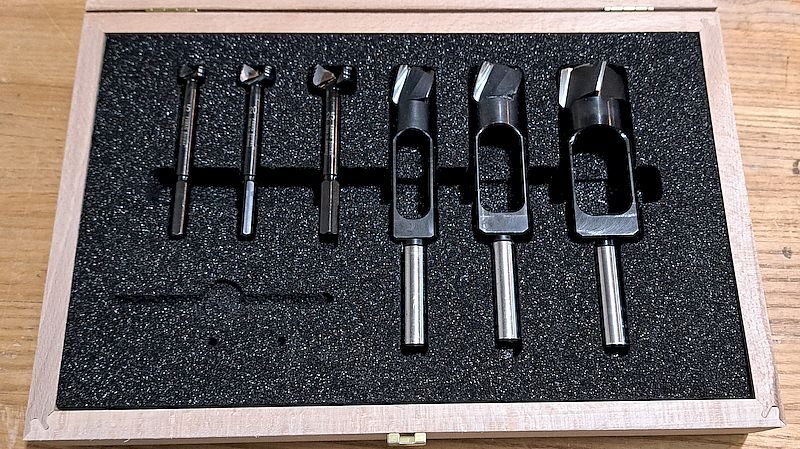
The FAMAG set produces clean, consistent plugs with minimal sanding and fitting, and precisely matched holes.
Disc and plug cutters (also called hole and plug cutters) are simple but surprisingly versatile tools that help you create clean, consistent plugs (or dowels) and matching holes for joinery and detail work. Whether you’re hiding screw heads, making inlay accents, or crafting wooden buttons, these cutters let you produce matching material from the exact stock used in your project — something off-the-shelf plugs can seldom achieve. For hobbyists and seasoned woodworkers alike, a good set of disc and plug cutters is a worthwhile upgrade that pays off in cleaner work and more professional-looking results.
Manufacturer: FAMAG
Model: 1628.306
Price: $294.95
Made in: Germany
Source: Kjpselecthardwoods.com
Features:
- 6 piece set: 15, 20 and 25mm plug cutters and matching 15, 20 and 25mm drill bits.
- Made from alloyed tool steel.
- CNC-ground.
- Accuracy to 1/100th of a millimetre.
FAMAG refers to this set as a “Disc and Plug Cutter,” though I tend to think of it as a plug-and-hole cutter, which is really what it excels at. The set I tested arrived in a well-made wooden storage box that keeps everything organized, protected, and ready for work. Inside are three plug cutters and three matching Forstner-style drill bits in 15, 20, and 25 mm diameters (.59″, .78″, and .98″), which conveniently cover the plug sizes I reach for most often in furniture and cabinetry work.
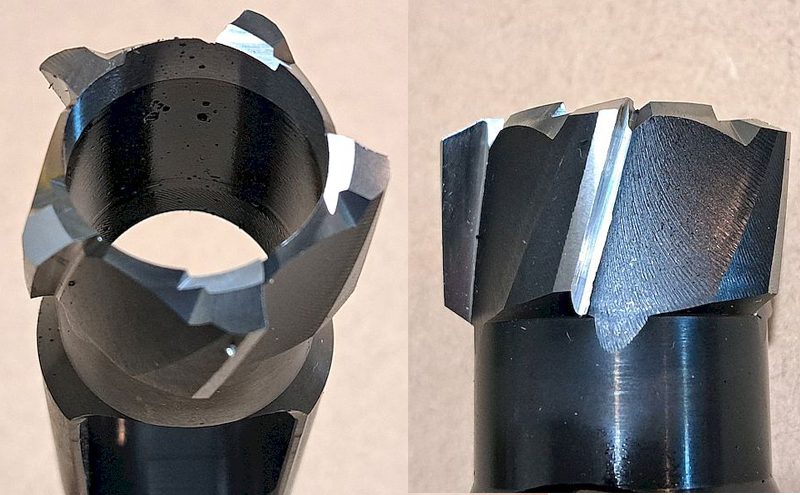
Both the cutters and drill bits are made from alloyed tool steel (commonly called WS tool steel). The manufacturing is impressively precise: the blanks are milled, hardened, and then CNC-ground — cutting edges, peripheral edges, and all. This level of care gives the cutters exceptional concentricity, meaning they run dead true in the drill press. That accuracy matters if you want tight-fitting plugs that sit cleanly and predictably. FAMAG even claims accuracy to 1/100th of a millimetre, and based on my results, I believe it.
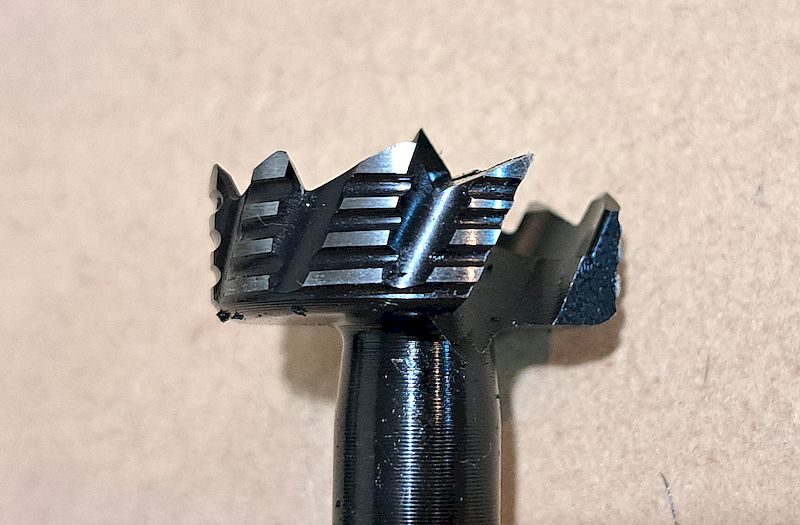
In use, the cutters produced perfectly sized plugs with clean edges and excellent concentricity. Plugs can be cut up to 3″ long. The combination of the two main cutting edges and the peripheral cutters leaves very little tear-out, even in tougher hardwoods. Each plug pressed or glued into place exactly as it should — no wobble, no gaps, no “good enough” compromises.
The matching Forstner-style drill bits performed just as well. The holes they cut were so precisely matched to the plugs that in a few cases I gave the plugs a quick pass with fine sandpaper just to ease the fit. That’s not a complaint — it speaks to how accurately these tools are made.
In my view, this set offers excellent value for serious woodworkers who care about precision, clean results, and long-term durability. It’s not a bargain-bin purchase — these fall into the “buy once, buy good” category. If you only plug the occasional screw hole, you could easily get by with a cheaper cutter. But if you’re routinely building furniture or cabinetry where plug work needs to be tight, clean, and nearly invisible, especially in hardwoods, this FAMAG set is absolutely worth the investment.
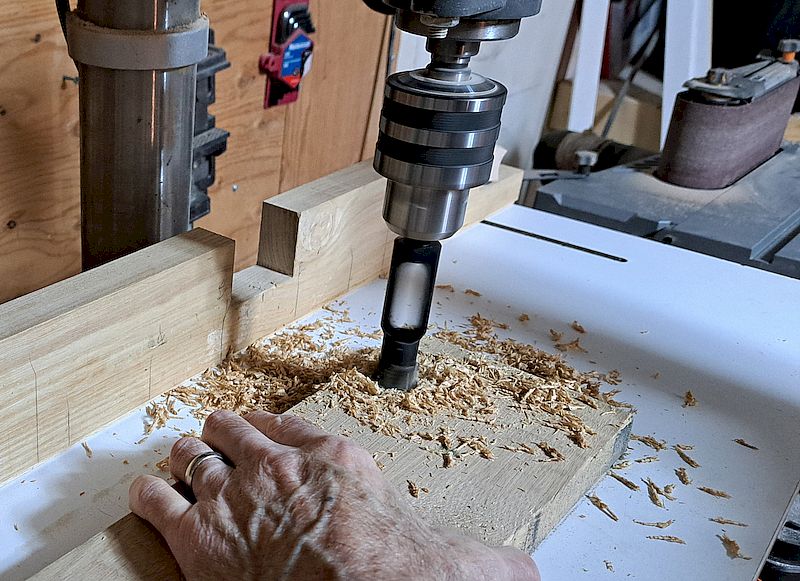
Here are a few tips that should help you get the most from these FAMAG disc and plug cutters.
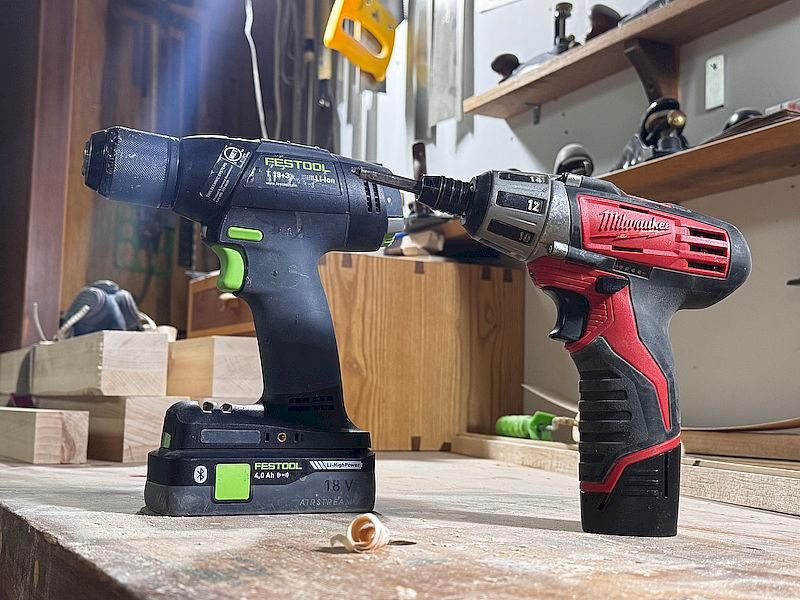
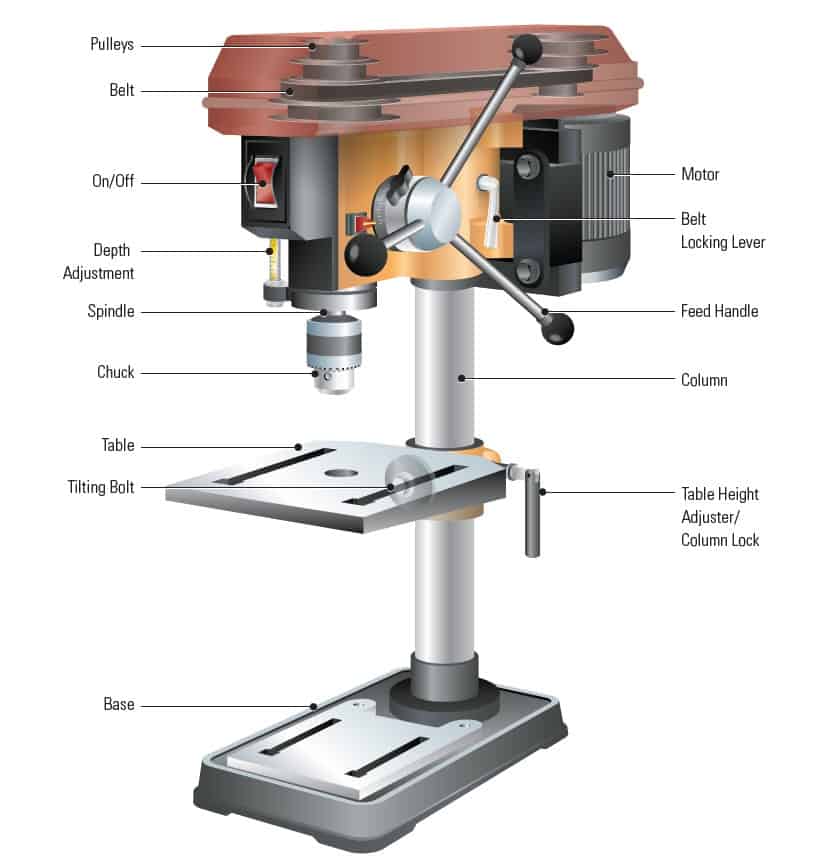
- It’s easier to make perfectly vertical cuts and get cleaner plugs using a drill press rather than using a drill/driver.
- Higher drill speeds cause burning and chatter. I like to aim for about 500 to 1,000 RPM when using hardwood and a tad faster (between 1,000 and 1,500 RPM) for softwood.
- Pitch buildup dulls the cutting edges quickly, so keep your cutters clean. After each session, wipe them with mineral spirits or denatured alcohol. If needed, lightly hone the outside bevel.
- Cut plugs slightly longer than needed. The extra length gives you room to trim flush with a chisel or flush-cut saw without marring the surrounding surface.
- Match grain direction for invisible repairs. For hiding screws use long-grain plugs for a seamless look on visible faces. Use end-grain plugs for textured or rustic work. Rotate the plug until the grain aligns before gluing it in.
- Don’t force the cutter. Let the tool do the work. If you feel excessive heat or resistance, back off, clear chips and resume cutting.
- When cutting out plugs place a sacrificial board beneath your stock. This prevents blowout and keeps the plug crisp and clean on both faces.
- If you work frequently in certain species, such as walnut, maple or cherry, and use a set diameter of plugs, cut a small batch and keep them in labeled containers. It saves time and ensures you always have matching material ready.