
FROM ROB'S BENCH
Inflation, cost of materials and how we can start to use materials more wisely

Rob Brown
Blog for March 6, 2024
If I were more into investments, banking and the general state of the economy, I’d know more about the technical aspects of inflation.
Not only about how high (or low) it is, but also about how that relates to historical values and what it may mean for the future.
At the end of the day, like many folks, I try not to spend beyond my means. I buy groceries, fill my tank with gas, pay for household costs and have a bit left over to do some fun things like buy a bike, go camping with the family and order takeout. I’m certainly not complaining. There are times when I wish I knew more about the economy, but that takes time and energy, and I usually have better stuff to do. I’m not a complete fool when it comes to what’s happening with our economy, it’s just that I tend to not follow it too closely.
Back to woodworking
Enough about the world of high finance. Woodworking is affected by inflation and all sorts of other factors that happen in the world around us. Let’s just start with lumber. I’m by no means overly knowledgeable when it comes to this topic, either. Maybe I should have titled this column “Things Rob knows little about.”
I’ve heard the weather this past winter will affect what the logging companies can get out of the forest. Low amounts of snowpack will cause problems not only for loggers, but will likely increase the number of forest fires in the warmer months. Who would have thought that snow, or lack thereof, would cause lumber prices to jump? Not me.
As we all know, the pandemic caused a massive number of challenges to industry, shipping and other aspects of the economy. The problem was much larger a few years ago, but things are still affected. It also changed the way people consume and the way we shop. We’ve become very comfortable with making online purchases, as that was the main way we could shop during the pandemic. Because of this, corrugated cardboard demand has skyrocketed, as companies need something to package all their products in for shipping. This is also where trees come back into the picture. With only so much pulp available, most of it is used to make cardboard, while paper production, in turn, goes down. This may not affect you very much, but Canadian Woodworking & Home Improvement has been directly affected by this. The price of paper has increased drastically over the past two years, not to mention the shipping we rely on to deliver all the print copies to subscribers. Not to get too far off topic here, but that’s why we needed to make some changes to the way we produce print issues of the magazine. We’re now producing three double-length issues per year, as opposed to six regular-sized issues.
The past year or so
I found lumber prices high a few years ago. The same thing happened with sheet goods. I found sheet goods increased in price more than lumber, but these sorts of variations could be regional, too. Over the past year I’ve found pricing on both lumber and sheet goods have come down slightly. They’re still quite pricey, but at least they haven’t continued to rise.
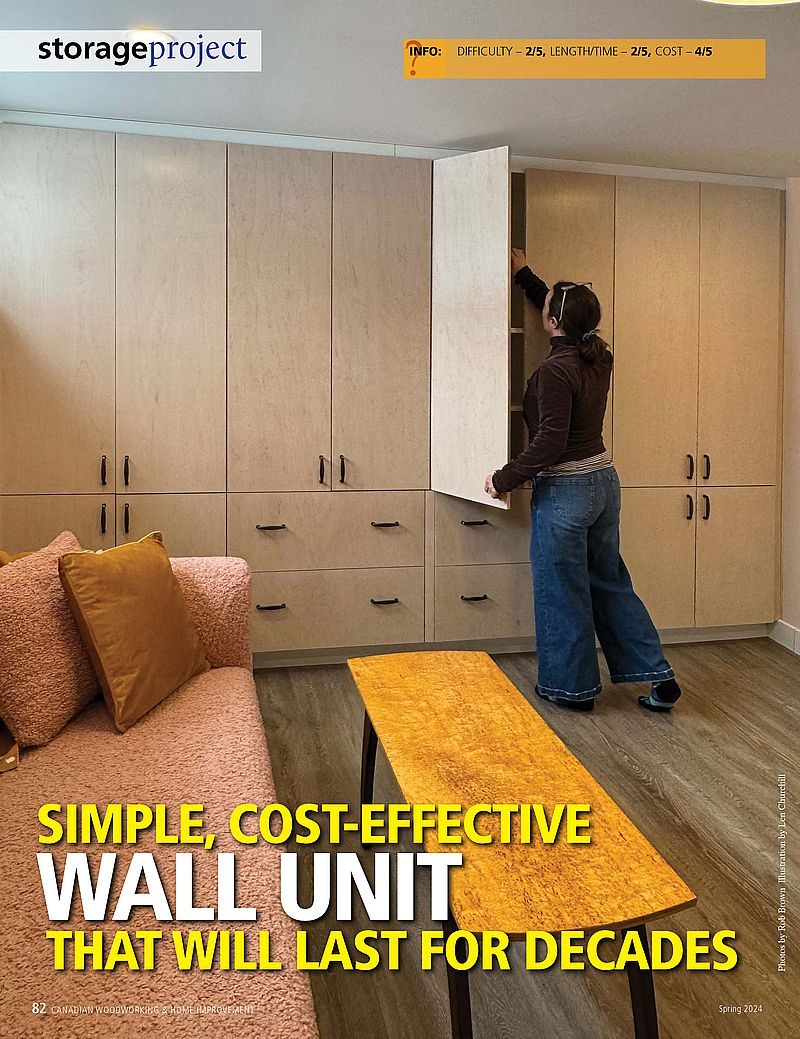
Getting back to the magazine for a moment, the theme of the issue we just released is storage. In a few of the articles I wrote I mentioned that while engineering the project (both a large wall unit and a modern bookcase) I made sure to use materials carefully, as they’re expensive. I spent a lot of time designing the projects to use materials in the most cost-effective and sustainable way possible. This meant I had to do a few things that go against conventional wisdom. For one, the large wall unit I wrote about has no back to it and is made from single panels, as opposed to full cabinets with back panels. It used to be we could use material as we wished, and didn’t give much thought to reducing our usage, as material costs were very reasonable.
The future
Even if material costs were reasonable, I’d like to think we now know that using (wasting) less material is best for us all, in the long run. In one respect, cost is one thing that will immediately make us all consider how we use materials. Hitting us in our pocketbooks is one thing we see right away. Hopefully it also causes us to respect raw materials more and use them in a more sustainable manner. Inflation will likely cause materials to rise in price for a long time, so coming to grips with that sooner than later is probably a good idea.
Lumber Prices
My guess is that hardwood lumber prices have come down over the past couple of years, even more so than sheet goods. That might be a regional thing, though.
Check It Out!
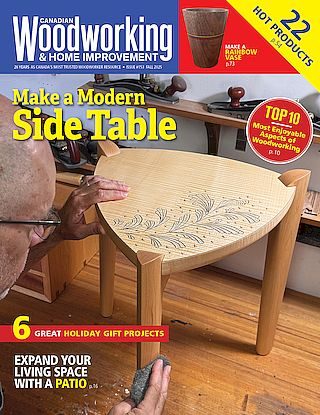
This is the lead page of the wall unit article I wrote for our Spring 2024 issue. I did my best to keep the cost of this build down, as materials are very expensive and not to be wasted.


Rob, thanks for the thought provoking article.
One way to spend less on wood is to harvest it yourself.
When out walking in my neighbourhood I often notice logs placed out for collection, often a species that you might not see commercially.
They have yielded some nice bowls, or strips for cutting boards.
As I’m sitting in living room, the floor is ash flooring I made from neighbourhood trees killed by the emerald ash borer.
The shed has about 1,000 board feet of free red oak from urban logs in the Toronto area, now being converted to Shaker style kitchen cabinet doors.
Most furniture lumber is around a metre in length, a log that your average shop band saw will easily handle.
Regards, Rod
Some other ways to save money on material:
Buy shorts. Shorts are anything under 4 ft in length. Some suppliers will sell shorts at a discounted price and a lot of the time, you don’t need a long piece for what you are doing anyway.
Buying bundled packages can also save money on material as a lot of retailers will bundle up old stock and sell the bundle at a discounted price. This works if you can utilize different lengths and widths in your projects as bundles will contain some less desirable pieces that you will have to cut knots and crappy edges/ parts out off.
Thanks for your article, Bob. I never gave much thought to many issues you brought.
When I ,bandsaw out the turning wood from a square block, I save the 4 corners. I then glue the to other left over wood to create another turning block.
I do this because I don’t waste wood and store bought wood cost.
Your remarks gave me more to think about.
Over the years, I have saved money on materials in a number of ways:
1) Amazon – as you point out. Not only am I able to find a lot of what I am looking for on amazon for cheaper but even if the price is the same, the fact that its delivered to your door saves time and gas money.
2) Alternate woods that are IMO better. I routinely will use spruce rather than pine. Not only is it cheaper but it is a little harder as well. I have found almost knot free spruce 2 X material at the big box stores which I then let dry out in my garage. It works well in a lot of cases.
3) Re use material – I have reused all sorts of wood from strip hardwood flooring that has been pulled as a result of renovations to wood and trim that has been pulled from demolitions. This will require some work as it has to be cleaned up , nails pulled, sections with holes cut out etc. . the quality of the wood though can be very good. 8 ft. long pieces of oak, birch and maple strip flooring or very straight grained spruce 2 x material , trim that would be very expensive to buy if you can find it at all are examples. This material will also be dry (no danger of warping/ twisting) as it has been in place for many years.
4) Auctions, Kijiji, adds – I have picked up rough oak for a lottle over $1/ board foot this way – mind you you generally have to buy 100 BFM plus.
Just a few examples