
If your workflow emphasizes clean, repeatable, edge-referenced drilling and you already use Festool equipment, the MB 40-Set is a strong, time-saving choice.
For many woodworkers and avid DIYers, accuracy and control can mean the difference between a clean, professional result and a frustrating rework. A portable drill attachment bridges the gap between the convenience of a hand drill and the precision of a drill press. It allows you to drill perfectly straight or angled holes without the need for a large, stationary drill press — making it ideal for smaller workshops or on-site projects where space and portability matter.
These attachments stabilize the drill and minimize bit wander, making repeatable hole placement a breeze. This gives you a level of control normally reserved for bench-mounted tools.
For hobbyists who value precision but don’t have room for a full-size drill press — or professionals who need accuracy on the go — a portable drill guide is a smart investment, delivering portability, affordability, and dependable accuracy.
Among the many reputable models on the market, the Festool MB 40-Set stands out for its ability to integrate seamlessly with Festool’s FastFix accessory system, dust extractors and guide rails.
Manufacturer: Festool
Model: MB 40-Set
Price: $345
Source: Find your dealer
Key Features:
- Aluminum, steel, plastic materials
- Easy to set exact repeatable drilling depth
- Connects to dust extractor for chip-free drilling
- Chuck locks in by hand
- 32mm system hole series compatible
- Rubber base reduces movement
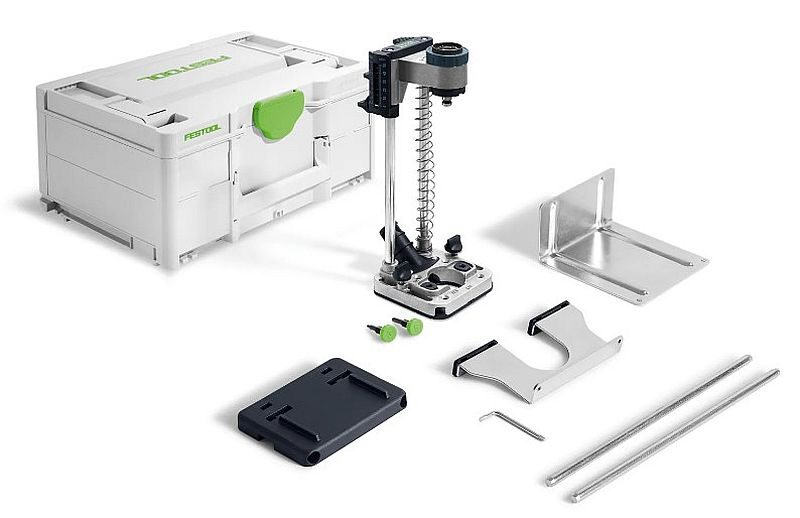
- Includes guide rail adapter, 2 stops, 2 pins for 32mm system, Torx key, SYS3 systainer
The Festool MB 40-Set is one of those tools that doesn’t look all that remarkable at first glance — until you start using it. Essentially, it turns a compatible Festool hand drill into a compact, depth-controlled drilling station for both shop and on-site work. It accepts almost any Festool chuck with a FastFix holder, which makes changing chucks quick and keeps the drill and guide perfectly aligned. The set comes with a generous lineup of accessories — a parallel side fence (for drilling in face grain) , end stop (for drilling end and edge grain) , guide-rail adapter, two 12″ rails, pins for 32 mm spacing, and a Torx key — all neatly packed in a Systainer for transport and storage.
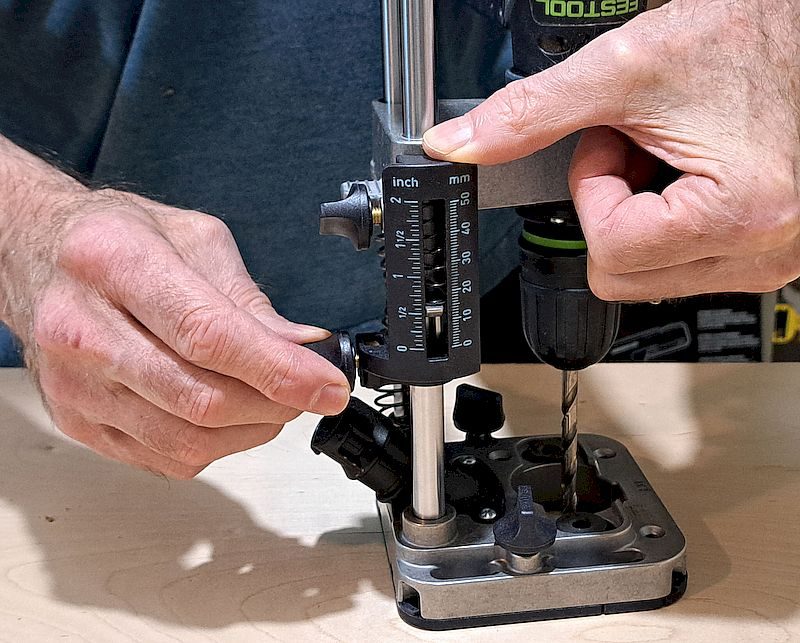
What immediately stood out to me was the precision of the depth control. The scale is easy to read, and setting consistent plunge depths (up to about 2″) is intuitive once you’ve used it a few times. The spring-assisted plunge gives a smooth, controlled action that feels closer to a drill press than a handheld drill, and it helps prevent bit wander when starting holes. The solid base, with its rubberized contact points, keeps the attachment steady on flat work surfaces.
I don’t typically use the European frameless 32 mm system, but if you do, the MB 40 could be a serious time-saver. The integrated pin holes make quick work of drilling accurately spaced cabinet holes, and the included pins fit 3 mm and 5 mm bits (though not 8 mm). It’s a clever setup for anyone building modular casework or shelving.
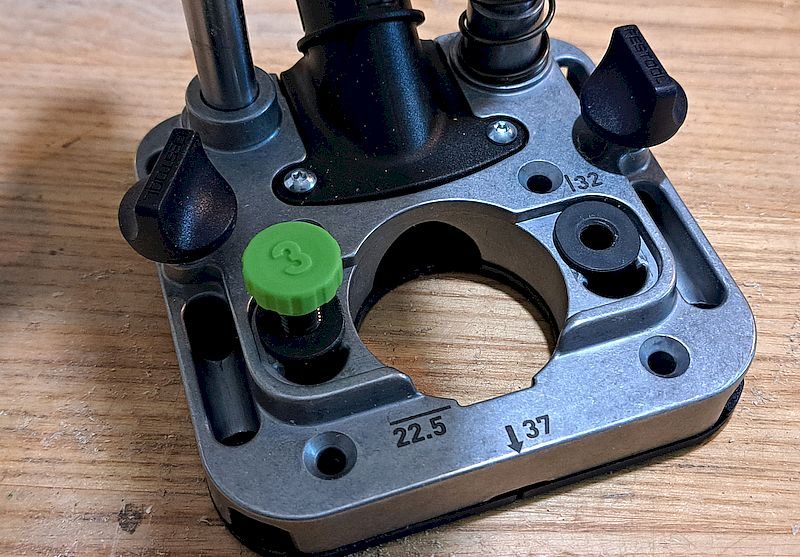
Dust collection is another strength. The dust port lets you hook a Festool extractor directly to the base, which makes a noticeable difference when drilling face-up or working in finished spaces where cleanup matters. I found that when drilling a series of holes, using a dust extractor was an necessity — otherwise the center area around the drill bit became clogged with debris.
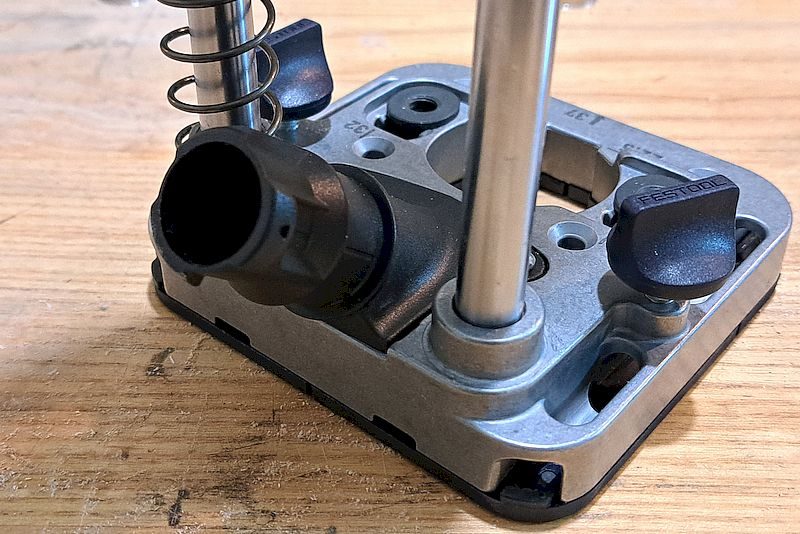
You can also use the MB 40 freehand, such as when drilling holes in the center area of large panels. That’s typically how I use it when I only have a few holes to make — it’s quick and efficient. When positioned against an upright, like a cabinet partition, it allows you to drill holes as close as 1-1/2″ from the edge.

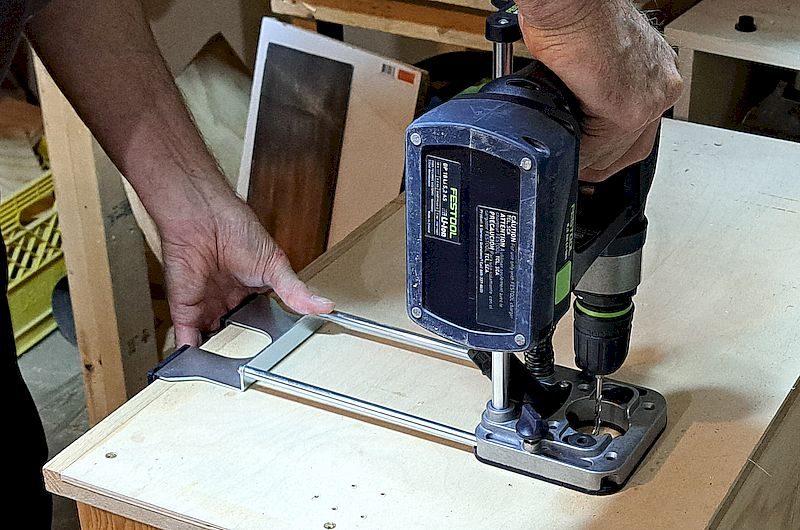
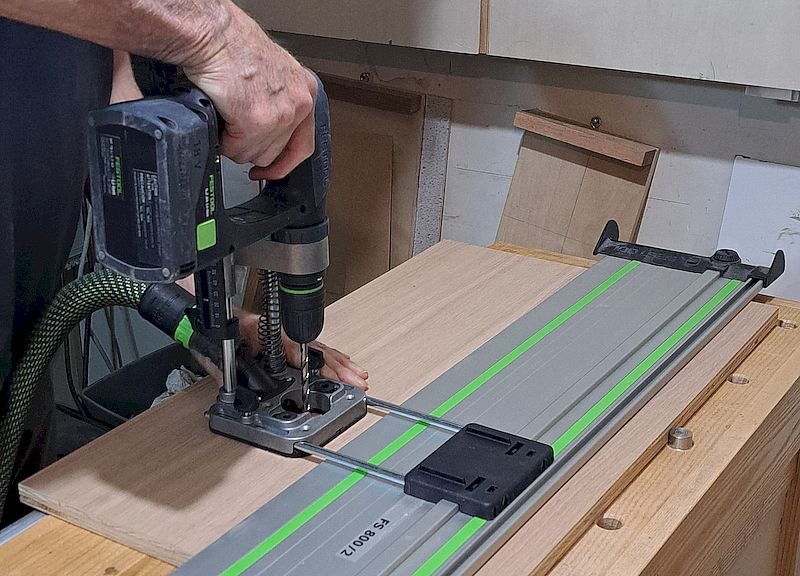
When I need to drill long, straight runs or repeat offset holes along a panel I use the guide-rail adapter — it’s unbeatable for layout consistency.
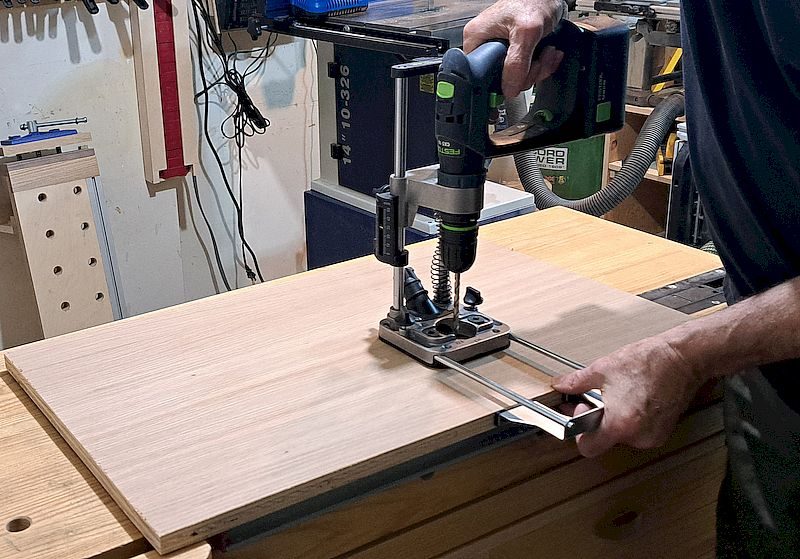
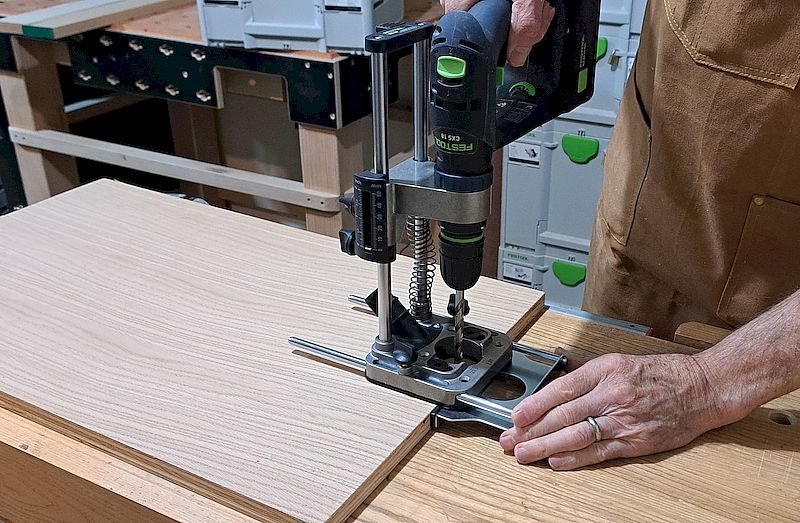
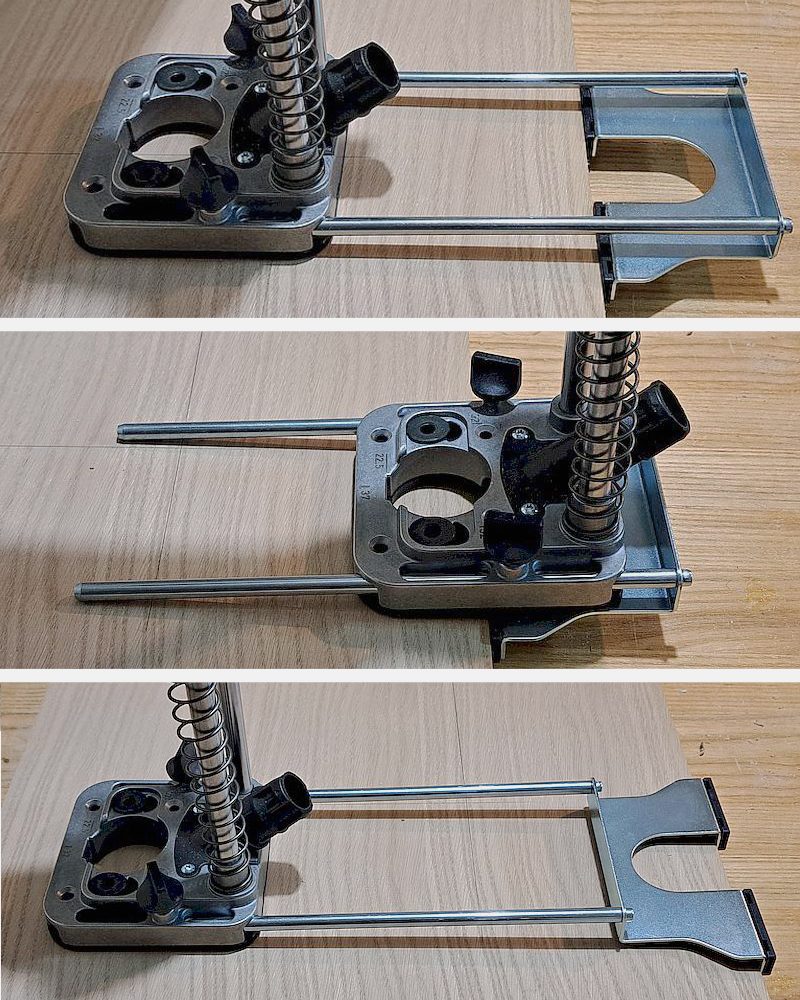
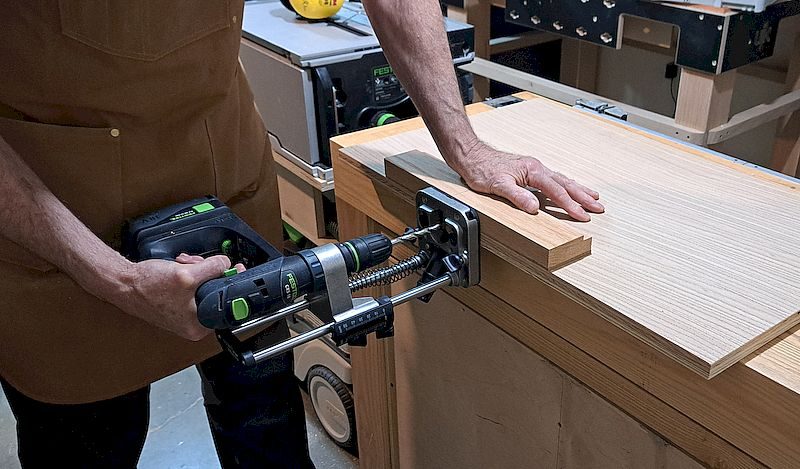
The parallel edge guide also earns its keep for drilling series of holes up to about 13″ from an edge. You can install the guide with it facing forward or backward. In the forward position (1st photo below) you can drill holes right along the edge of a panel, and up to about 7-3/8″ from the edge (2nd photo). Turn the guide end-for-end and you can drill holes up to about 12-3/4″ from an edge.
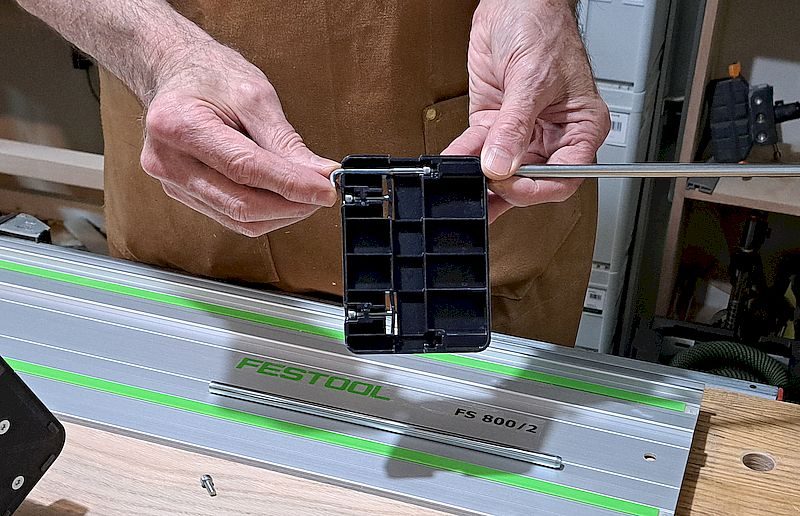
One small gripe: the Torx key for attaching rods to the guide rail adapter is short and small, making it awkward to use and easy to lose.
Switching to the end-stop setup (for drilling into end grain) takes a bit of effort, though. You need to remove the top cap, pull the carriage, depth unit and spring, rotate the carriage 180°, and then reassemble everything — plus remove the dust port. It takes around five minutes, and you’ll need to reverse the process to go back.
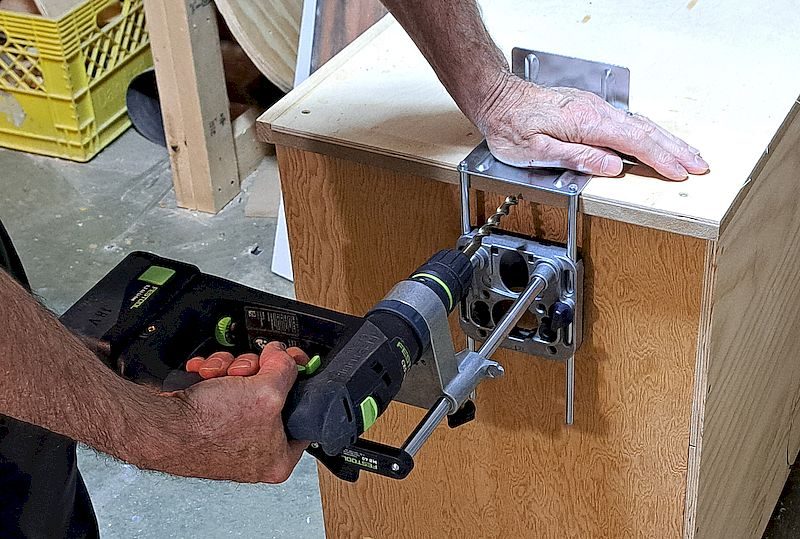
I found it faster to attach a 1-1/8″ spacer to the footplate for centering in 3/4″ stock and simply adjust the spacer thickness for other material sizes.
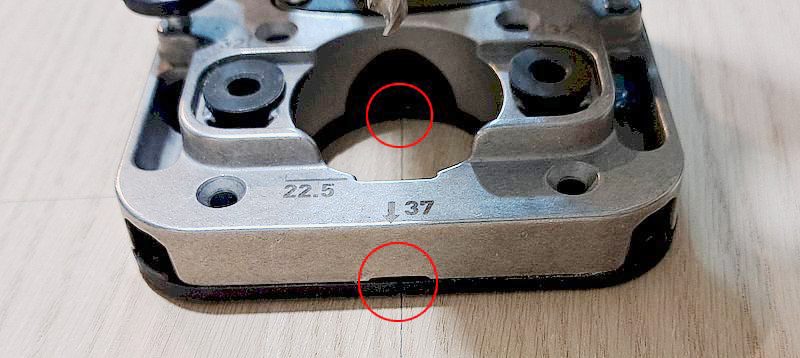
Another small gripe: the alignment marks on the base (located on all four outside and inside edges) are hard to see under certain lighting conditions. A removable alignment disk for centering bits would be a thoughtful addition.
Build quality is, unsurprisingly, excellent. The Centrotec-style chuck interface makes for quick changes, and the Systainer keeps the kit tidy and portable — handy for anyone moving between job sites.
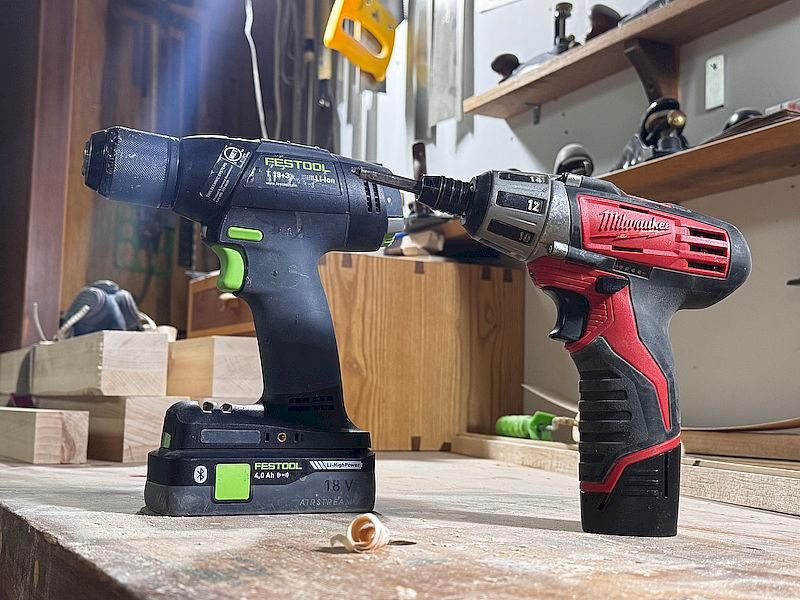
That said, the MB 40 won’t replace a full drill press. It’s built for precision, not brute force. It’s not designed for non-Festool drills, and it’s not ideal for large Forstner or hole-saw bits, especially if you need to remove the dust shroud to make them fit. The plunge range tops out around 2″, so deep boring or high-torque drilling is beyond its comfort zone.
Then there’s the cost. As with most Festool gear, this is a premium accessory, and it only makes sense if you’re already invested in the Festool ecosystem. If you’re starting from scratch, you might find a benchtop drill press or heavy-duty guide system a more economical route. But if you already use Festool drills and guide rails, the MB 40 fits seamlessly into that workflow — and the convenience, precision and cleanliness it offers can more than justify the price.
In practice, I’ve found the MB 40 most valuable for layout-sensitive tasks where accuracy, perpendicularity, and repeatability matter — things like dowel joinery, shelf pins, hinge cups, and hardware installation. I think it’s less suited to production boring, but for fine cabinetry or precision installation work, it’s a standout performer.
In the end, the Festool MB 40-Set delivers drill-press-like accuracy in a portable format that plays perfectly to Festool’s system strengths. Its precise depth control, dust collection and accessory flexibility make it a highly capable addition for anyone already in the Festool orbit. Just keep in mind its limitations — stroke, bit size, and price — before deciding if it fits your workflow.