
FROM ROB'S BENCH
Spring migration

Rob Brown
Blog for May 8, 2025
My wife is an avid birder.
And since spring migration is currently underway, she’s been busy watching birds, both common and uncommon, flutter about the yard and surrounding neighbourhood. Many of them are going north, but some will stick around until fall.
We’ve seen rose-breasted grosbeaks, yellow-rumped warblers and indigo buntings in the yard. Buffleheads, wood ducks and green-winged teals have all been on the lake and river, just a minute or two from our home. But the species that’s caught my wife’s attention is the Baltimore oriole, with its brilliant orange chest, rump and wings.
Please stay!
My wife immediately told me we had to do everything we could to coerce it into staying not only in this area, but maybe even very close to our yard, for as long as possible. All it needed was a good food source.
Within an hour she started showing me feeders orioles like: simple, orange-coloured shelters, with a nail to hang an orange half from as well as a dish to hold grape jelly. My first thought was “I never knew Orioles were so picky.” Now I know. Then I saw the price. At nearly $100, I was surprised.
Now, my wife is no fool. She didn’t ask me to make a feeder, but she also knew she didn’t have to. She knew once I saw how simple the feeder was, and then noticed the price, I’d head straight to the shop. She was right. Within a few hours I had the prototype in our yard, and my wife and the neighbour (who was looking on from her yard) were picking the design apart, so my next oriole feeder would be even better.
My NEXT feeder?
I guess I’m a sucker, as I took their notes and headed back to the shop the next day. It needed to be shorter, have a better opening for the jelly dish, a better hook and a pair of nails (not one) to better hold the orange halves. Got it. I didn’t know this simple feeder was going to turn into a multi-day project. Really, that’s my fault though. I should have known.
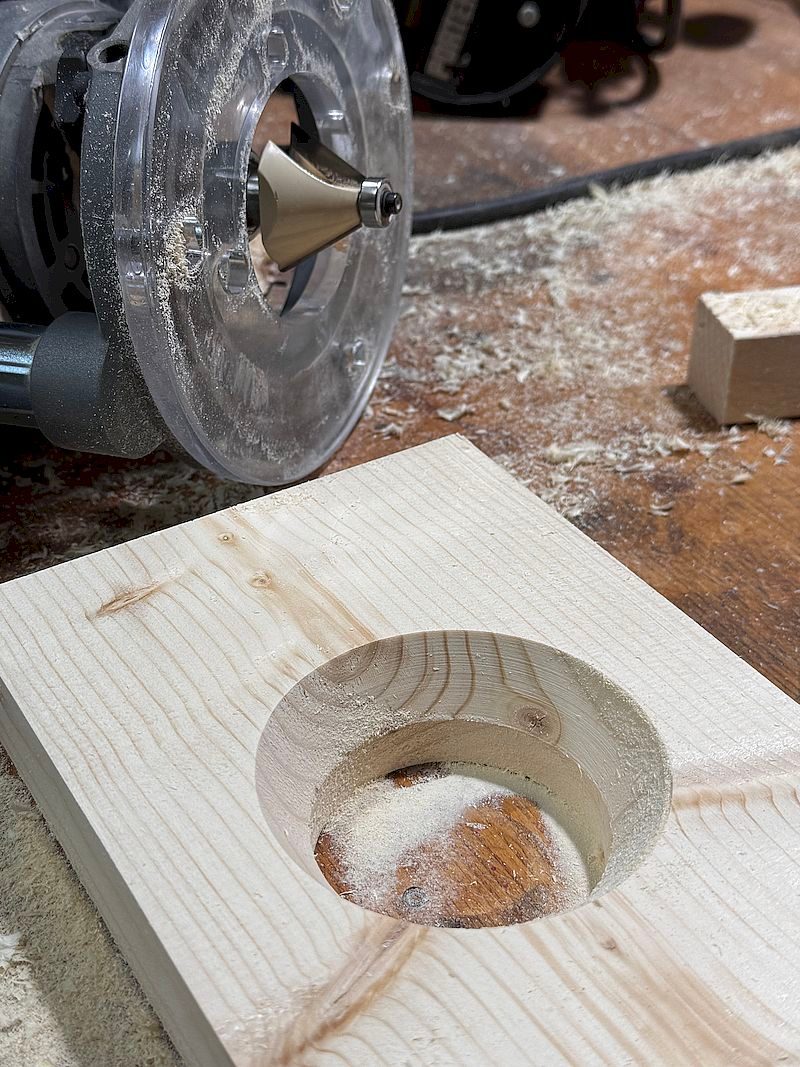
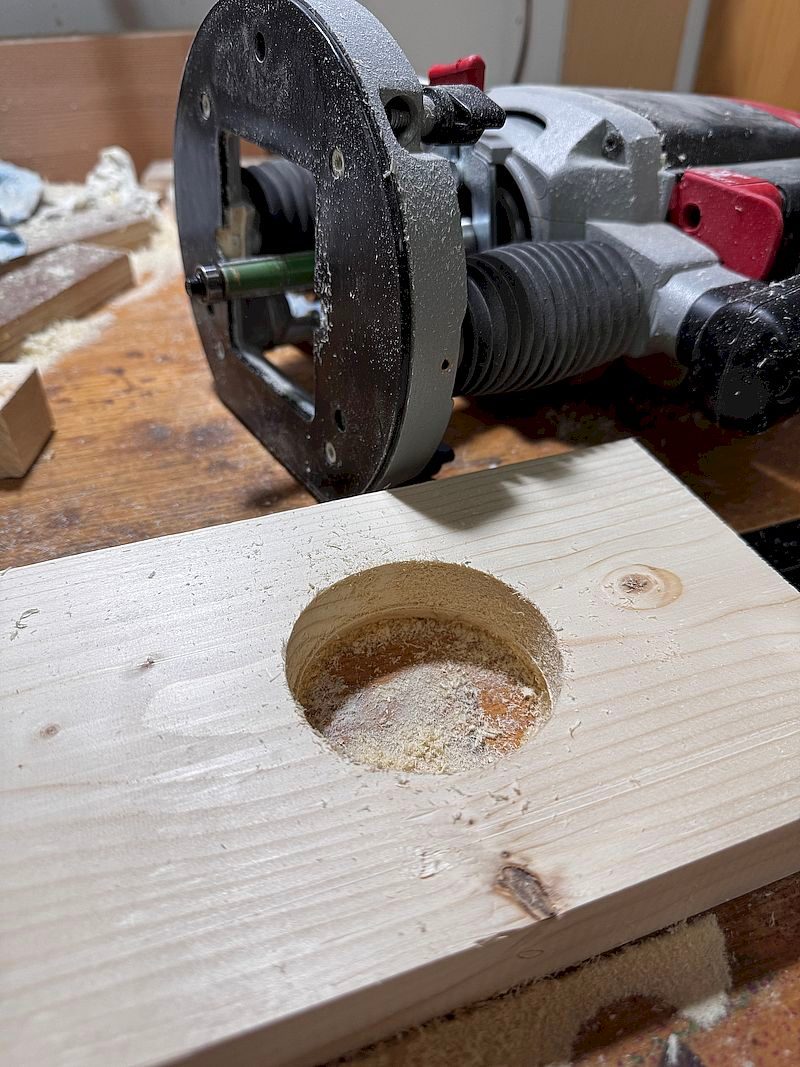
Thankfully, these feeders are easy to make. And the orange spray paint goes on nicely, adding a bold hit of colour to the 2×6 spruce material. The only tricky part was sizing the hole to perfectly accept the dish my wife wanted to use for the jelly. It was about 2-1/2″ in diameter, but only had a small lip around its upper edge to stop it from falling through the hole. I had a 2-1/4″ and a 3″ diameter drill bit, but nothing perfect. A jigsaw could work, but it wouldn’t leave a perfectly round hole. My solution was to drill the smaller hole, then use a 25° angle chamfer router bit to angle the sides of the hole. The jar could sit in the hole at that point, but I thought I might be able to further fine-tune the diameter of the opening with a carefully adjusted flush trim bit. If I could flip the workpiece over, then adjust the depth of the bit so the bearing ran on the tapered portion of the hole, I could widen it a bit. That worked surprisingly well and I was left with a nicely fitting dish. And the fact that I got to fire up two of my routers was a bonus; nothing quite as handy and multi-functional as a few good routers!
I then assembled the parts with waterproof glue and exterior screws, then added a couple coats of paint over the span of the day.
Home it came and I was told it’s perfect. We hung it up, filled the dish with grape jelly and placed it in its home, sliced an imported orange in half and placed one half on the nails, then waited. And to be clear, this wasn’t just any grape jelly we had in the fridge. This was 20 ounces (about 1/2 kg…only barely larger than the small jar of raspberry jam the humans in our home put on toast) of specialty grape jelly from the local birder store, which is free from preservatives and corn sweeteners. And it’s worth $15 a pop. It’s what all the orioles love, my wife told me. Oh boy.
One well-fed bird
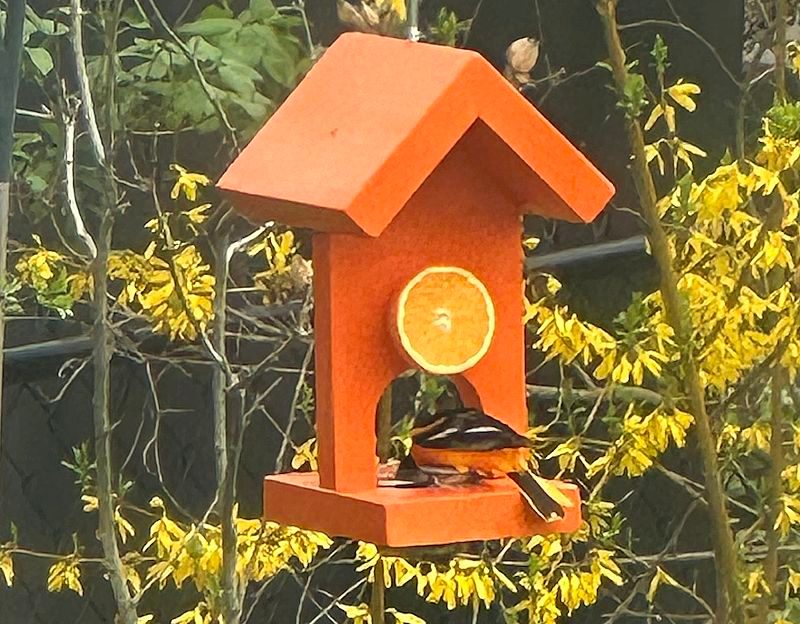
Later that evening (I’m learning birds are more likely to show themselves in the early morning or evening) we had our friend return. He bounced around in the bushes, which my wife noticed right away. Within minutes, he was perched on the feeder, sipping grape jelly and nibbling on a fresh orange. I was quickly called over. “Look, he likes the feeder!” my wife exclaimed. I didn’t hesitate to say, “I hope he enjoys it. It’s a meal that’s more expensive than one of us going to the local steak house for dinner.”
Thankfully, she laughed. I hope this oriole stays, or I may have to make a grosbeak hotel or a wren ranch instead.
One Expensive Meal
Here's our new dependent, sipping fancy grape jelly and nibbling on an orange half. He didn't even have the decency to pose nicely for the camera.
Trickiest Part
Once the smaller hole for the dish was drilled, I chamfered its underside with a 25° router bit.
A Bit Larger Hole
With the chamfer complete, I flipped the bottom over and carefully adjusted the depth of the flush trim bit in my router. By running the bearing on the chamfered edge, I could remove small amounts of material, enlarging the hole so the dish would fit in the cavity nicely.
Make the Upright
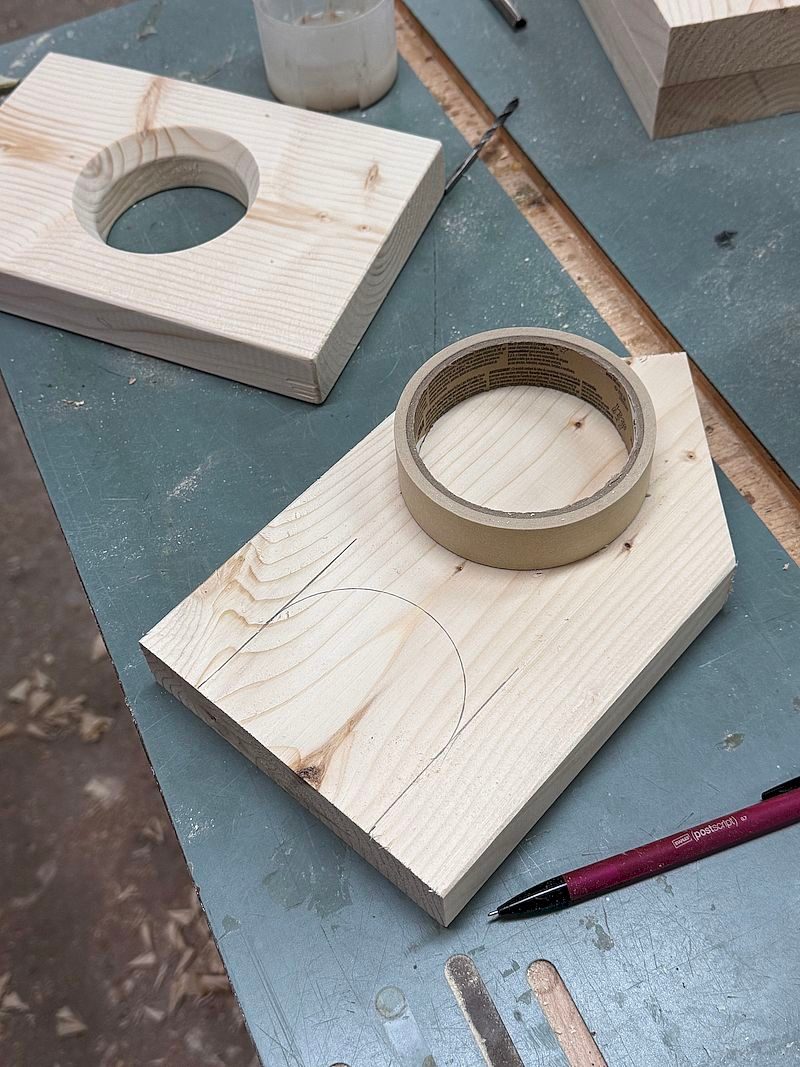
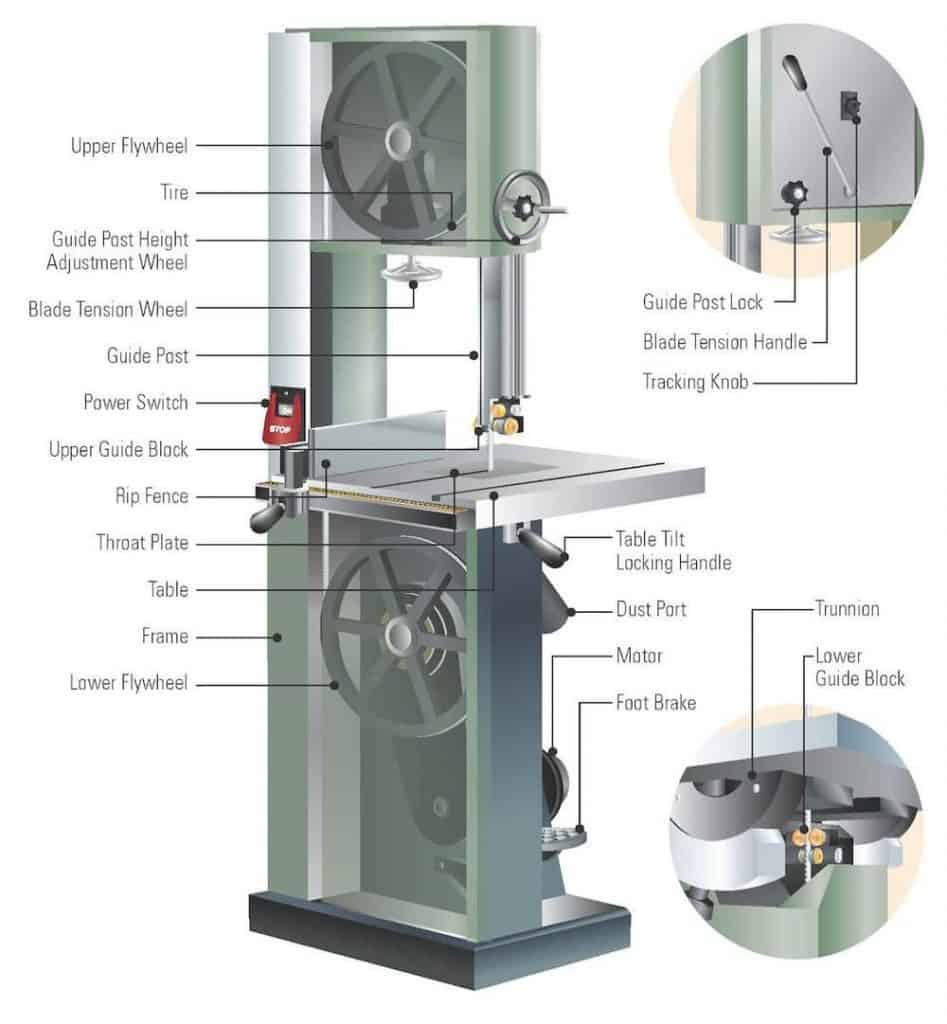
With the base complete, I made the upright. A roll of masking tape helped lay out the curve, which was then cut on the bandsaw.
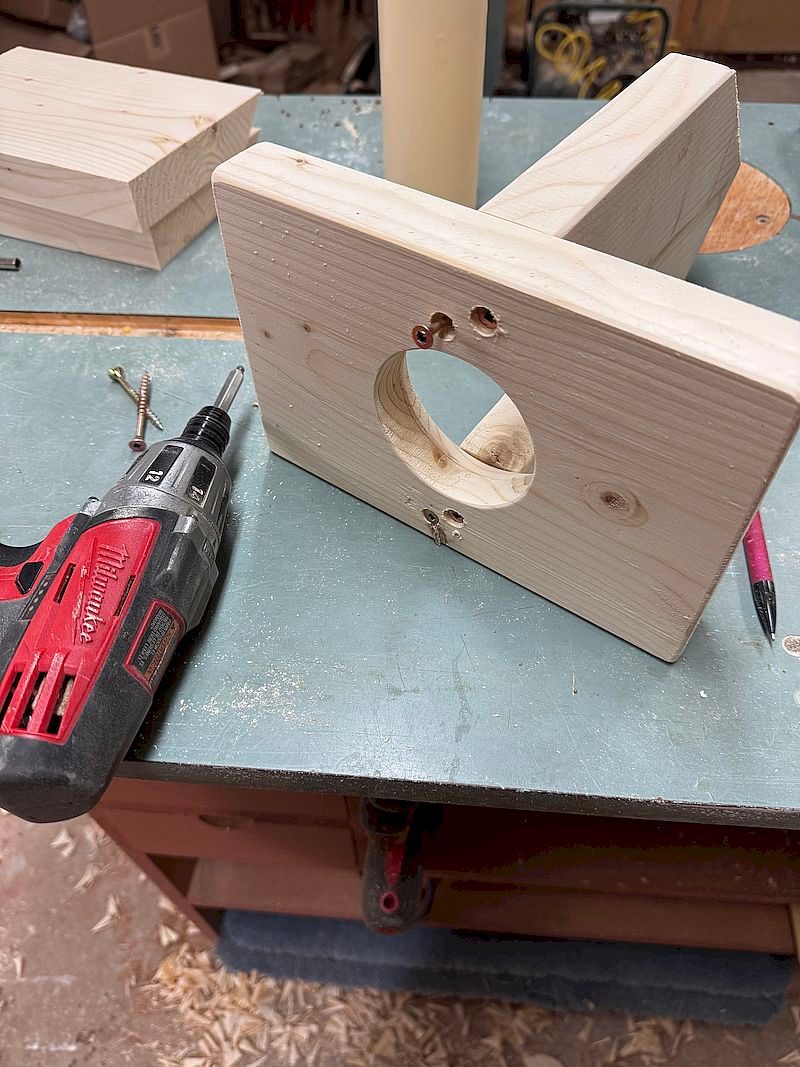
Screw It Together
A few exterior screws will hopefully keep this feeder together for a while. Predrilling was critical, as the smaller extensions on the upright would have split without them.
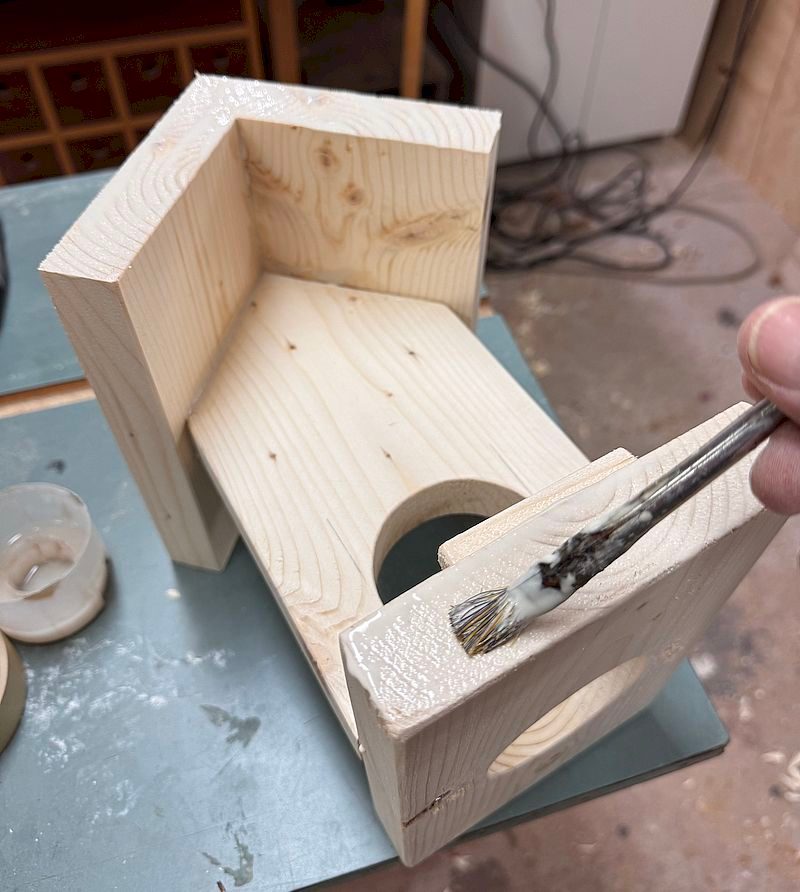
Glue Sizing
The outdoors wreaks havoc on wood and finishes. I decided to apply a layer of glue to all of the end grain in this oriole feeder to try and keep moisture from wicking into the wood and causing rot. Only time will tell if this helps.

Rob,
A happy spouse means a happy house.
Been there done that!