WOODWORKING TOp 10 LIST
Top 10 reasons to use veneer in your next project

Rob Brown
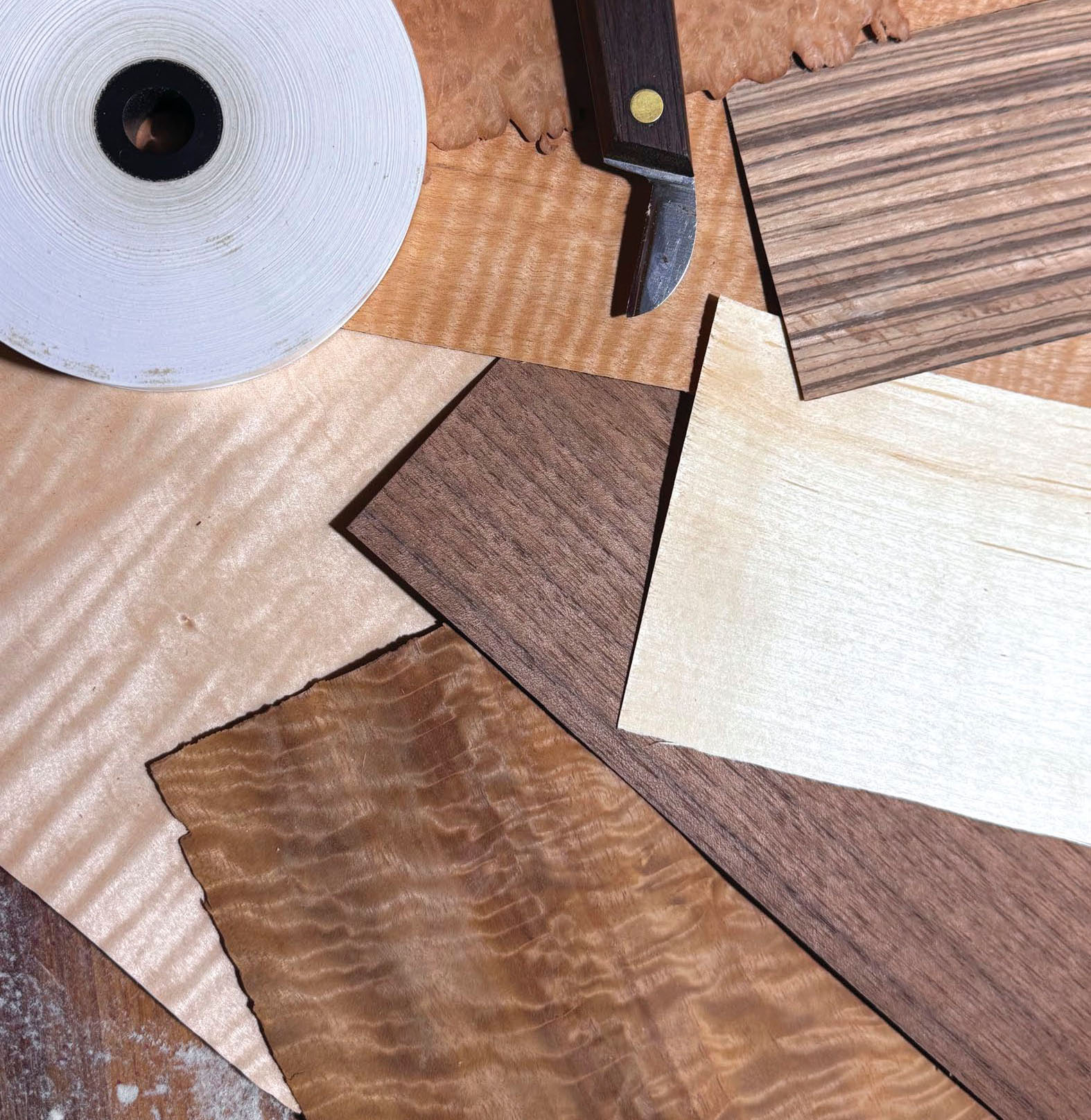
Veneer may be rarely used for the majority of a project, but it can often play a large role in furniture construction, especially in high-end pieces. There’s a learning curve when you start using veneer, but that learning will pay off once you’re comfortable with the tools and techniques.
1. More Than Just the Regular Solids – Maple, pine and cherry are great, but what about tineo, Macassar ebony and anigre? There are lots of species available, both from around Canada and around the world.
2. Uniform Grain and Colour – Wood varies quite a bit, even from within the same tree. One plank of hard maple might look a fair bit different than another, which makes maintaining the uniformity of a project difficult. Because of how it’s sliced and sold, sheets of veneer are similar to each other when bought from the same flitch.
3. Often Makes Engineering Easier – Building a piece of furniture with large, solid wood panels can sometimes be difficult, as you have to allow those panels to move freely with the seasons. Veneered panels don’t shrink and swell like solid wood, making engineering and construction easier.
4. Highly Figured Surfaces – Sure, you can find figured solid wood, but nothing like you’ll come across with veneer. The most prized logs, burls and other features are almost always saved for veneer slicing.
5. Can Make Veneer Matches – While it’s possible to make some nice grain matches from solid wood, the fact that it moves means trouble, long term. And since veneer sheets that were sliced back-to-back have virtually the same grain on mating sheets, mirroring those patterns makes for some amazing effects.
6. Create Flat Panels – There are many instances where keeping a panel flat is important. While a country pedestal table may look just fine with a wavy top, many workpieces look and function best when they’re flat. Veneered panels stay much flatter over time.
7. Use It For Details – A thin, light-coloured piece of veneer sandwiched between two darker pieces of solid wood (or veneer, really) is a very refined detail. There are many other subtle (or bold) details that can be created by using veneer.
8. Respect the Environment – Using more valuable and expensive species for visible surfaces and less valuable species (or man-made boards) on the inside can be a good long-term approach to using the limited raw materials we woodworkers have at our disposal.
9. Short-Grain Workaround – Grain direction needs to be considered on certain solid wood furniture parts, or the maker risks creating a weak part. For example, the grain in a table apron typically runs horizontally, as that’s the strongest approach, but it’s easy to run a veneered surface so its grain runs vertically, which might look better in certain situations.
10. Get Fancy – Layering different species of contrasting-coloured veneer on top of each other, then carving or cutting through them, can leave you with a bold look. Or maybe it’s layering different veneers to create a unique bent lamination that excites you. Veneer can outperform solid wood in many technical and artistic situations. Experimenting with different approaches might surprise you.